


.svg)

.svg)
.svg)

🇺🇸 22 Boston Wharf Rd, Boston, MA 02210
🇬🇧 2 Pear Tree Court, London EC1R 0DS
© 2026, Juro. All rights reserved.


🇺🇸 22 Boston Wharf Rd, Boston, MA 02210
🇬🇧 2 Pear Tree Court, London EC1R 0DS
© 2026, Juro. All rights reserved.

DealHub built its CLM around the quote-to-cash process — which means contracts are a downstream output of your CRM, not a system of record in their own right. Juro is purpose-built for the entire contract lifecycle. Which do you need?












Juro is built for one thing: making contracts faster and easier for every team involved — not as a lightweight feature inside a sales platform, but as a dedicated contract lifecycle platform that the entire business actually wants to use.
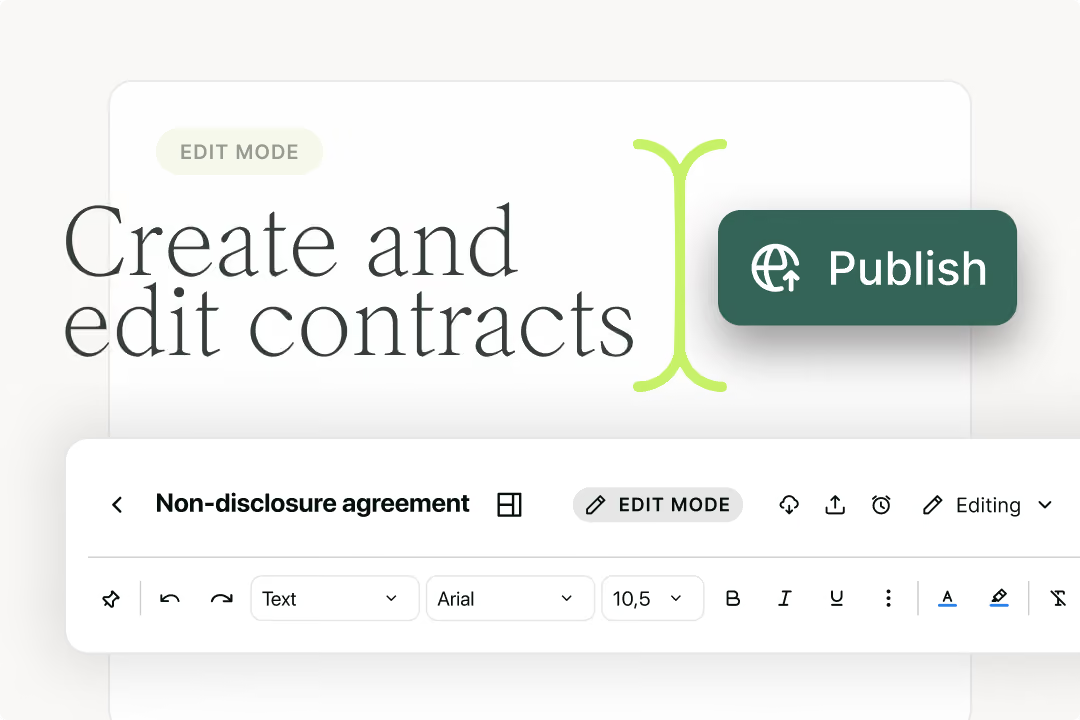
DealHub is a revenue platform that happens to include CLM — contracts are an output of the sales process, not a system of record. Juro is built exclusively for contract management, which means the functionality goes deeper, and adoption goes wider. Every team runs their contracts in Juro — not just sales.
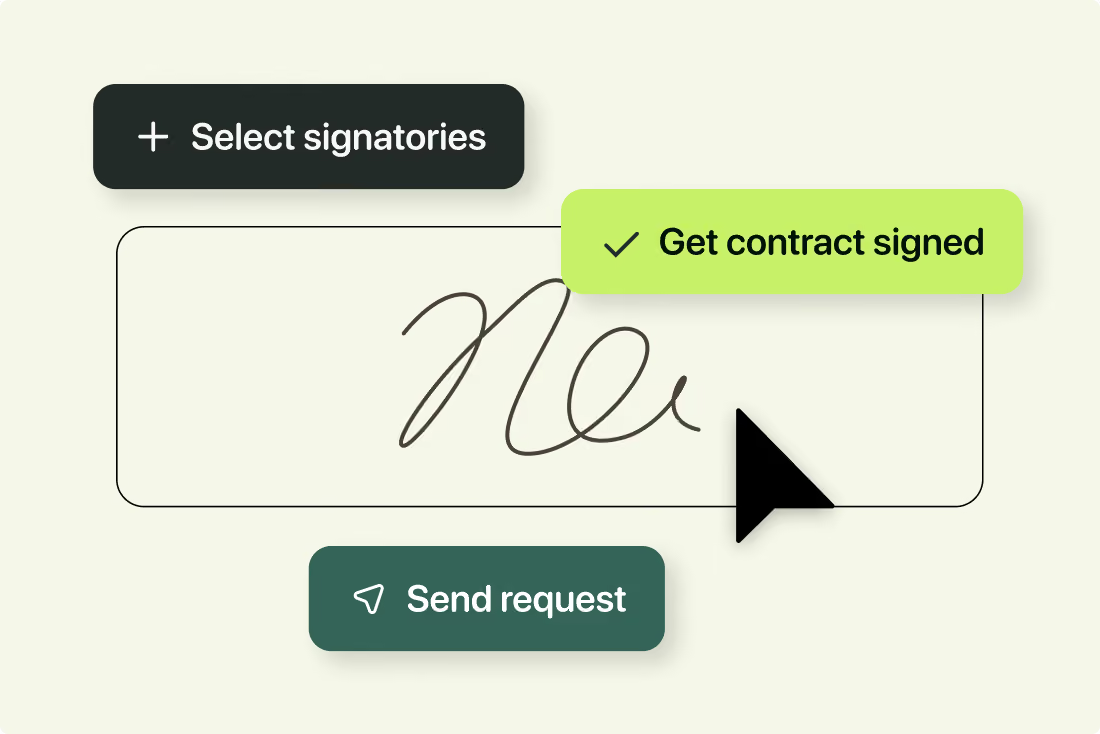
DealHub relies on DocuSign or Adobe Sign to get contracts signed — an additional vendor, additional cost, and a broken workflow where contracts leave the platform and don't always come back as a coherent record. Juro's legally binding eSignature is built in and included in all plans. Everything from first draft to an executed document stays in one place.
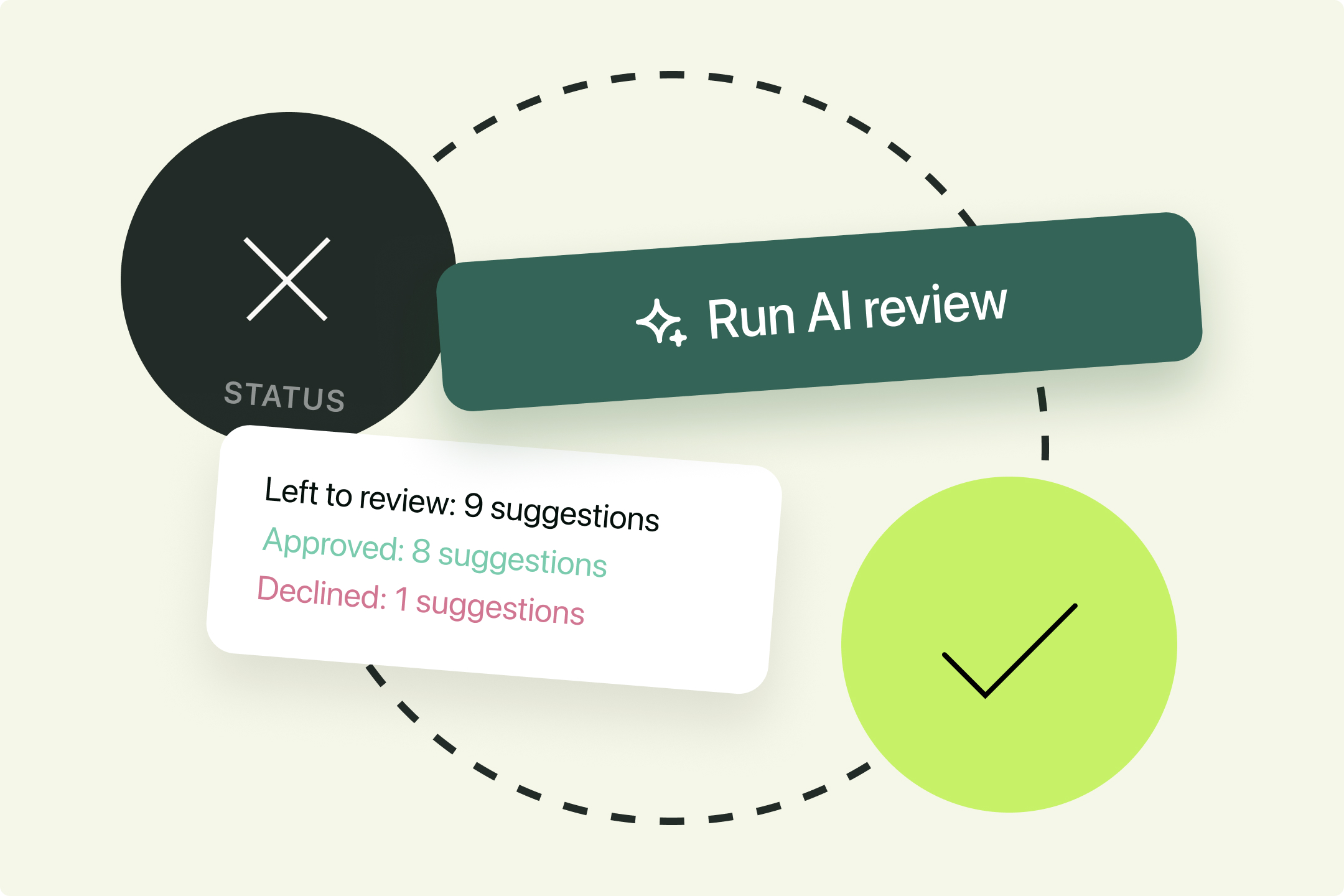
DealHub outputs contracts as PDFs. When a counterparty wants to negotiate, you're back in Word, exchanging redlines over email, with no AI to assist and no audit trail keeping pace. Juro keeps negotiation in the browser — both sides in the same document, with AI-assisted review and a complete record of every change.


.svg)
“Implementing Juro has revolutionized the way that my team manages contracts! Tasks that used to take 1-2 hours are now completed in a fraction of that time!”
“Using Juro as our CLM tool has changed the game for our legal team. Implementation was excellent. Each of our contract stakeholders (including counsel) has increased visibility into contract terms and status”
“One of the amazing things about Juro is that the sales team can self-serve and take a lot of the initial burden off of the legal team”
“Implementation took months, each contract has so many nuances that it's tough to build a system that will suit everyone. This means you have to build exceptions into Dealhub in a very manual process. It became one persons part-time job to implement"
“The customization is sometimes the curse with Dealhub. You need to be careful to understand every odd way a sales person/CSM could possibly try to configure a contract but at the same time institute strict rules to keep contract creation in alignment with the rules of the business”
“Approval processes are not as smooth or detailed as we would hope for (multi-step, specific fields, etc)”

Because DealHub bundles CLM with CPQ and other revenue platform features, the total cost of ownership is typically higher for teams that primarily need contract management.
Juro is priced as a standalone CLM, which means you're not paying for sales tooling you don't need. For teams whose primary requirement is managing contracts across legal, HR, finance, and ops, Juro typically represents better value.
DealHub is primarily a CPQ (configure, price, quote) and revenue platform. CLM is included as part of the suite, but it's built to support sales-driven contract workflows — not the full range of contract types that legal, HR, and procurement teams need to manage.
If you're looking for a dedicated CLM, DealHub wasn't designed to be one. Juro is built exclusively for contract lifecycle management, which means deeper functionality and broader adoption across the business.
No. DealHub does not offer native eSignature functionality. To get contracts signed, you'll need to push them to DocuSign or Adobe Sign — which means an additional vendor, additional cost, and a workflow that takes contracts outside the platform.
Juro's legally binding eSignature is built in and included in all plans. Counterparties can sign directly in their browser without needing a Juro account, and the entire process — from first draft to countersigned document — stays in one place.
No. DealHub does not publish pricing on its website. You'll need to go through a sales process to get a quote, and costs vary significantly depending on your configuration. Juro's pricing is available on request and scoped around your actual contract needs — without the complexity of bundled module pricing.
DealHub has a repository, but it's oriented around sales contracts that originate from the CPQ process — not a cross-functional contract store for legal, HR, and procurement. Searching, tracking renewals, and reporting on obligations across the full portfolio isn't what it's built for.
Juro's intelligent repository gives every team live visibility into their contracts, with AI-powered data extraction, configurable dashboards, and automated reminders that surface what matters before it's too late.
DealHub's contract functionality is built around agreements that originate from the CPQ process — sales contracts tied to a CRM opportunity. Contracts outside that workflow are not well-supported.
Juro handles every contract type across every team. Legal sets the templates and guardrails, and business teams self-serve, regardless of where the contract originates.
DealHub outputs contracts as PDFs rather than Word documents, which means collaboration and negotiation typically requires exporting into Word and working outside the platform. This creates version control issues and breaks the audit trail.
Juro has a browser-native editor that eliminates the Word dependency entirely — contracts are drafted, reviewed, negotiated, and signed without ever needing to leave the platform.
Looking to compare more solutions? Check out these comparison pages:
Lorem ipsum dolor sit amet, consectetur adipiscing elit. Suspendisse varius enim in eros elementum tristique. Duis cursus, mi quis viverra ornare, eros dolor interdum nulla, ut commodo diam libero vitae erat. Aenean faucibus nibh et justo cursus id rutrum lorem imperdiet. Nunc ut sem vitae risus tristique posuere.



Hello. We are Juro Online Limited (known by humans as Juro). Here's a summary of how we protect your data and respect your privacy.


