




.svg)

.svg)
.svg)

🇺🇸 22 Boston Wharf Rd, Boston, MA 02210
🇬🇧 2 Pear Tree Court, London EC1R 0DS
© 2026, Juro. All rights reserved.


🇺🇸 22 Boston Wharf Rd, Boston, MA 02210
🇬🇧 2 Pear Tree Court, London EC1R 0DS
© 2026, Juro. All rights reserved.

If you’re running a lean legal team, time is the most valuable currency you have.
Legal Ops exists to create leverage: cutting wasted cycles, preventing fire drills, and giving lawyers back their focus. The right hacks — practical, actionable steps — can add up to hours saved each week.
But knowing where to start can feel overwhelming. Should you tackle reporting first? Fix intake chaos? Consolidate tech? The reality is that most legal teams are losing hours every month in the same handful of places… the places where small changes can unlock big wins.
That’s where these eight Legal Ops hacks come in. They’re designed to be quick to implement, easy to scale, and — most importantly — proven to buy back time for overworked in-house teams.
Reporting is vital, but it’s also repetitive. Every month, legal teams lose hours gathering data on core metrics like contract volumes, cycle times, or spend. They’re traipsing through spreadsheets, knee deep in email threads, and pulling the same numbers over and over.
But like most repetitive tasks, this can be automated with the right tooling or workflows established. Instead of manually compiling these figures, legal ops teams can build a reporting template, connect their data sources, and put comms on autopilot for legal department KPIs.
Estimated time saved: 8+ hours every month, based on manual reporting and spreadsheet wrangling taking at least a day every month.
If legal support requests come from different people, landing in different places, and at different times, you’re already losing. DMs, emails, “quick questions” in the corridor — all they do is slow you down and cause you to lose sight of the highest-impact work.
The fix is simple: give the business one front door to legal. That way, asks are properly triaged, you can reject half-baked requests, and you’ll be subject to fewer distractions.
Successful legal operations teams are using tools like Juro to implement this, with many even enabling commercial teams to self-serve on contract creation using pre-defined templates, workflows, and forms.
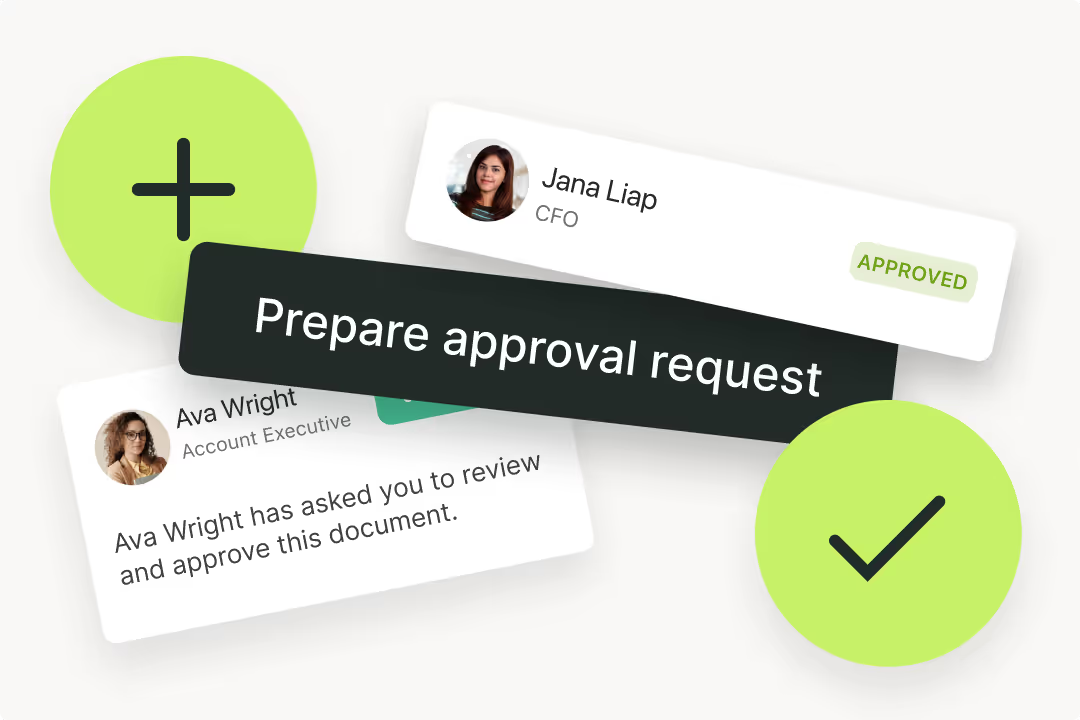
Take Funnel as an example. Before implementing Juro, the legal team was required to review every single contract that landed on its desk. In some cases, it was taking fifteen manual steps to get an agreement reviewed and approved.
That changed when they adopted Juro’s contract management solution. The legal team established pre-defined templates with locked fields and standardization. They also implemented advanced approval workflows for agreements where the details of the deal deviated from the standard terms.
{{quote1}}
After implementing Juro, the number of contracts that required legal review and approval dropped by 88 per cent. Not only did Funnel’s contract intake process enforce standardization, it automated the contract creation based on this information, significantly reducing the burden placed on legal from routine agreements.
Estimated time saved: 7+ hours every month, based on 15-20 intake requests each week, with at least five minutes wasted chasing missing information for each. Multiply time won back dramatically if you can empower commercial teams to self-serve.
If every liability clause or governing law debate lands on legal’s desk, something’s broken. And playbooks are the fix.
Think of a playbook as the operating manual for how and what your company negotiates. Instead of each lawyer retaining this knowledge in their head (and answering the same questions on repeat), you write it down once and scale it across the business.
First, start by identifying your most frequently negotiated clauses — liability, indemnities, payment terms, governing law. For each one, set out:
Then, turn that into something more actionable and accessible to the wider organization. The result is fewer escalations, faster deals, and a business that feels empowered instead of stonewalled. And for legal, it means you only step in when something genuinely risky hits the table.
Don’t bury the playbook in a PDF nobody will read. Embed it directly into your CLM, contract templates, or even a searchable wiki. That way, when sales or procurement hit a sticking point, the guidance is right there in front of them.
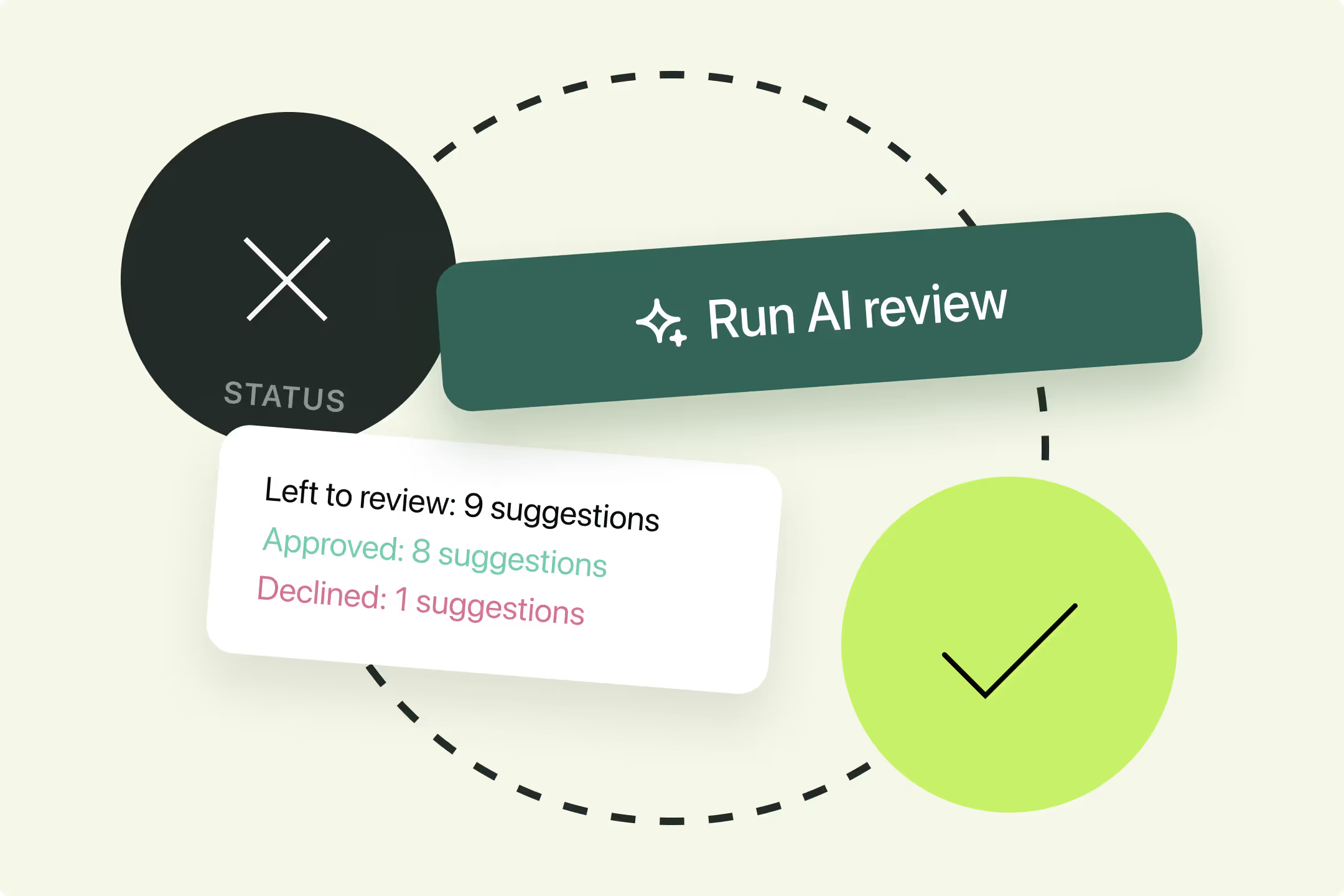
Better yet, intelligent contract automation tools like Juro can automate these playbooks, using your instructions to review and redline contracts with AI and automate routing for agreements.
We’ve created a detailed guide to contract playbooks that digs into the details of how legal leaders are building repeatable, robust contract management policies and guardrails.
Estimated time saved: 10+ hours every month, based on dozens of clause escalations and contract-related questions each month, with each taking between 20 to 30 minutes. Some Juro customers have even cut time lost to contracts by 253 per cent.
But if you’d prefer to speak to a contracting specialist from our team about what’s possible, hit the button below to book a personalized demo. We’ve powered 2.5m+ contracts to date, and we’d be happy to help.

Signatures are where deals so often grind to a halt. One side is ready to move, but internally, nobody’s sure who can sign, or the document bounces between executives for weeks. Worse still, someone outside their authority signs — creating avoidable risk.
Start by defining signature authority thresholds: who can sign what, at which contract value, and for which type of agreement. Publish this signature policy where everyone can see it — pinned in Slack, linked in Notion, or baked into your intranet.
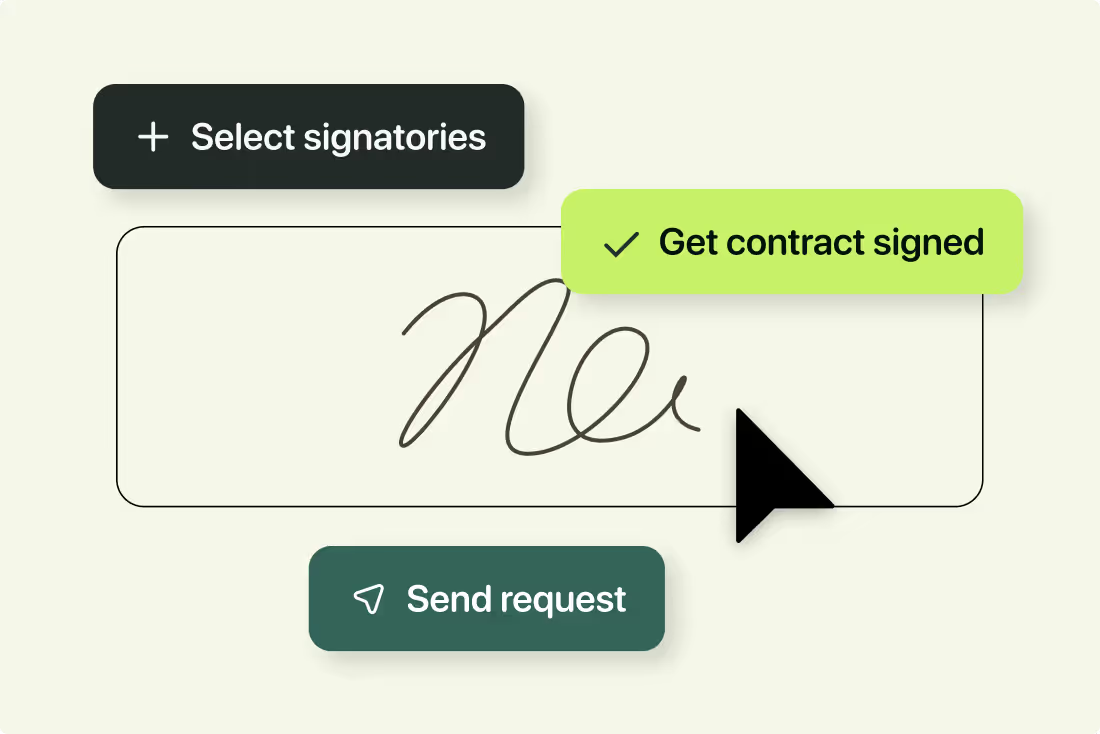
Once you’ve done that, take it a step further to make execution painless. For example, you can route signatures automatically using eSigning tools or your CLM’s built-in approval workflows. This feature is often referred to as signing orders, or sequential signatories. You can also set up chasers and reminders so contracts don’t languish forgotten in inboxes.
With this system in place, you turn the signature process from a blocker into a moment to celebrate instead.
Estimated time saved: 5+ hours every month, based on a minimum of ten contracts delayed by signature confusion each month, with at least half an hour lost to each.
Legal tech stacks have a habit of multiplying. One platform for eSignature, another for redlining, another for storage — before you know it, you’re juggling six logins and paying for tools nobody uses. Every extra platform creates drag: more context-switching, more integrations to manage, more confusion for business users.
Well, this is your sign to take a step back and audit your stack. List each tool, what it does, and how often it’s used. Chances are, you’ll spot significant overlap or upside from combining and integrating workflows.
Many modern CLMs (Juro included) combine eSignature, repository, approval workflows, and reporting in a single system. By consolidating this functionality, you reduce both cost and cognitive overhead.
The goal isn’t to rip and replace everything overnight — it’s to simplify. Fewer tools means less admin, better adoption, and a legal team that spends time on contracts, not chasing down login details or repeating data entry.
Estimated time saved: 4+ hours every month by removing constant context-switching and admin across tools, resulting in at least an hour won back each week.
Most escalations don’t happen because sales or procurement can’t handle them — they happen because they don’t realize they’re allowed to. Every “quick question” about governing law, liability caps, or who can sign drags legal into low-value work that shouldn’t need input in the first place.
Instead, invest time in teaching this once. Host a short training on the five issues that generate the most noise for commercial and procurement teams. Record it, back it up with a simple one-pager or flowchart, and share it widely. Once colleagues have clarity and guardrails, they stop leaning on legal for every minor clause tweak.
And training doesn’t need to end in a slide deck. With Juro, you can embed playbooks, fallback guidance, and FAQs directly into the contract workflow. That way, when sales is working through a contract, the answer to “Can we change this?” is right there on the screen — no interruption required.
The cultural shift is just as important. Instead of seeing legal as a blocker, the business sees you as an enabler: the team that empowers them to close deals faster, without extra risk.
{{quote2}}
Estimated time saved: 7+ hours every month assuming that legal receives between five and ten “quick questions” each week, each consuming ten minutes each.
Outside counsel invoices often read like a guessing game: block billing, vague “research” entries, or multiple partners charging for the same call. Reviewing them line by line is tedious, unpredictable, and a huge drain on your time.
The solution is to be upfront with your expectations. Build an outside counsel playbook that covers:
Then enforce it. eBilling systems like SimpleLegal or Brightflag can flag non-compliance automatically. If budget is tighter, even a spreadsheet template works, as long as you apply it consistently.
The payoff is twofold: you save hours of manual review and you gain leverage. Once firms know the rules won’t budge, billing gets cleaner, faster.
Estimated time saved: 5+ hours every month, depending on the volume of invoices to review. Assuming that eBilling and playbooks cut review time in half at least.
Renewals are one of the silent killers of legal time. An auto-renewal buried in the fine print, a deadline missed because nobody had eyes on it — suddenly you’re scrambling to renegotiate with zero leverage. It’s costly, stressful, and completely avoidable.
The answer is better contract visibility. When renewal dates are hidden across inboxes, shared drives, or scattered spreadsheets, you’re guaranteed to get blindsided. But when every contract lives in a single system that tracks key dates and flags upcoming deadlines automatically, the dynamic flips. Legal moves from reactive to proactive.
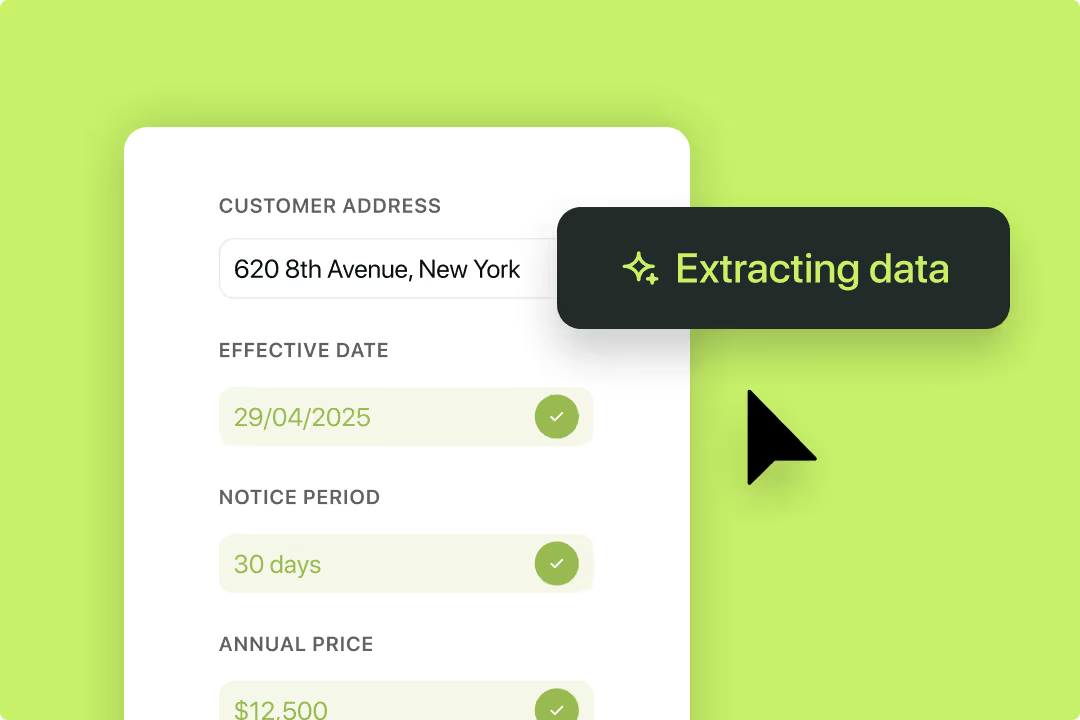
This is where tools like Juro make life easier. In a platform like Juro, renewal dates are captured at the point of contract creation, stored centrally, and surfaced in intuitive, customizable contract dashboards.
You can forget manually inputting contract data into an Excel spreadsheet every team a deal crosses the line, and automated reminders at 90/60/30 days mean no expiry sneaks up on you. Instead of firefighting, you’re choosing whether to renew, renegotiate, or terminate — on your terms, not theirs.
Estimated time saved: 4+ hours every month if tracking renewals manually takes at least an hour every week.
Individually, each of these hacks buys you back a few hours. But together, they transform your month. More importantly, you shift legal from reactive firefighting to proactive, strategic work. That’s not just a better way to manage your calendar — it’s a better way to run a legal function.
With Juro, you don’t have to piece these hacks together manually. From automated intake and self-serve templates, to embedded playbooks and renewal dashboards, Juro helps legal teams centralize, automate, and scale the way they work — all in one platform.
If you’re ready to reclaim your time and focus legal where it matters most, book a demo with Juro today.
Lorem ipsum dolor sit amet, consectetur adipiscing elit. Suspendisse varius enim in eros elementum tristique. Duis cursus, mi quis viverra ornare, eros dolor interdum nulla, ut commodo diam libero vitae erat. Aenean faucibus nibh et justo cursus id rutrum lorem imperdiet. Nunc ut sem vitae risus tristique posuere.


Hello. We are Juro Online Limited (known by humans as Juro). Here's a summary of how we protect your data and respect your privacy.





Victoria Sörving, Chief Legal Officer at Funnel

Serena Bertinetto, Legal Counsel at Volleyball World