





.svg)

.svg)
.svg)

🇺🇸 22 Boston Wharf Rd, Boston, MA 02210
🇬🇧 2 Pear Tree Court, London EC1R 0DS
© 2026, Juro. All rights reserved.


🇺🇸 22 Boston Wharf Rd, Boston, MA 02210
🇬🇧 2 Pear Tree Court, London EC1R 0DS
© 2026, Juro. All rights reserved.

Finance teams live and die by accurate data. Revenue forecasts depend on knowing when customer contracts renew. Cash flow models depend on understanding payment obligations. Risk registers depend on flagging auto-renewal clauses before they trigger.
Yet for most finance teams, the contracts that underpin all of that data are sitting in email threads, shared drives, or a folder someone labelled "signed docs – final FINAL."
That's not a contract repository. It's a digital filing cabinet. And the gap between the two is costing finance teams real money.
This guide covers what a genuine contract repository is, what finance teams specifically need from one, and which tools are worth evaluating in 2026 – including where a full intelligent contracting platform like Juro outperforms standalone repository tools.
A contract repository is a centralized, searchable system for storing, organizing, and extracting data from executed contracts.
The emphasis is on data: not just the documents themselves, but the structured contract metadata that makes those documents useful – counterparty name, contract value, start and end dates, payment terms, renewal type, governing law.
General file storage – SharePoint, Google Drive, a network folder – handles the document part. But it doesn't handle the data part. You can store a PDF of a vendor agreement in SharePoint.
However, you cannot easily answer "how much are we committed to spend with this vendor over the next 18 months?" without opening that PDF and reading it yourself.
By comparison, a proper contract repository solution treats each contract as a data record, not just a file. That distinction is what makes it useful for finance teams seeking to source, defend and leverage that data.

Finance's relationship with contracts is fundamentally different from legal's. That's why this article exists.
Legal cares about risk and compliance; finance cares about obligations, cash, and visibility. The two overlap, but the day-to-day priorities diverge.
Here's what finance teams typically need a contract repository to do:
Finance needs to know the total committed spend across all active vendor contracts, broken down by category, entity, or business unit. This shouldn't be just a quarterly exercise, but available on demand instead.
Think of the work involved in preparing a board-level spend review without this: someone opens a spreadsheet, cross-references a shared drive, chases the legal team for the latest signed versions, and manually enters figures that may already be out of date.
A robust contract repository system for finance teams makes that a quick query vs a fully fledged project.
Contract value needs to be structured and searchable – tagged by vendor category (software, professional services, facilities), legal entity, and renewal status – so finance can slice the data the way it needs to without touching individual documents.
Juro's intelligent repository structures every contract as a data record with configurable metadata fields.
This means finance teams can filter and report across the entire contract portfolio by value, counterparty, category, or any custom field they define – and Juro's Operator lets them query their contract database instantly, rather than running reports manually.
Because Juro also covers contract creation, key fields like contract value and payment terms can be locked into templates from the start, so the data remains clean and predictable before a contract is ever signed.
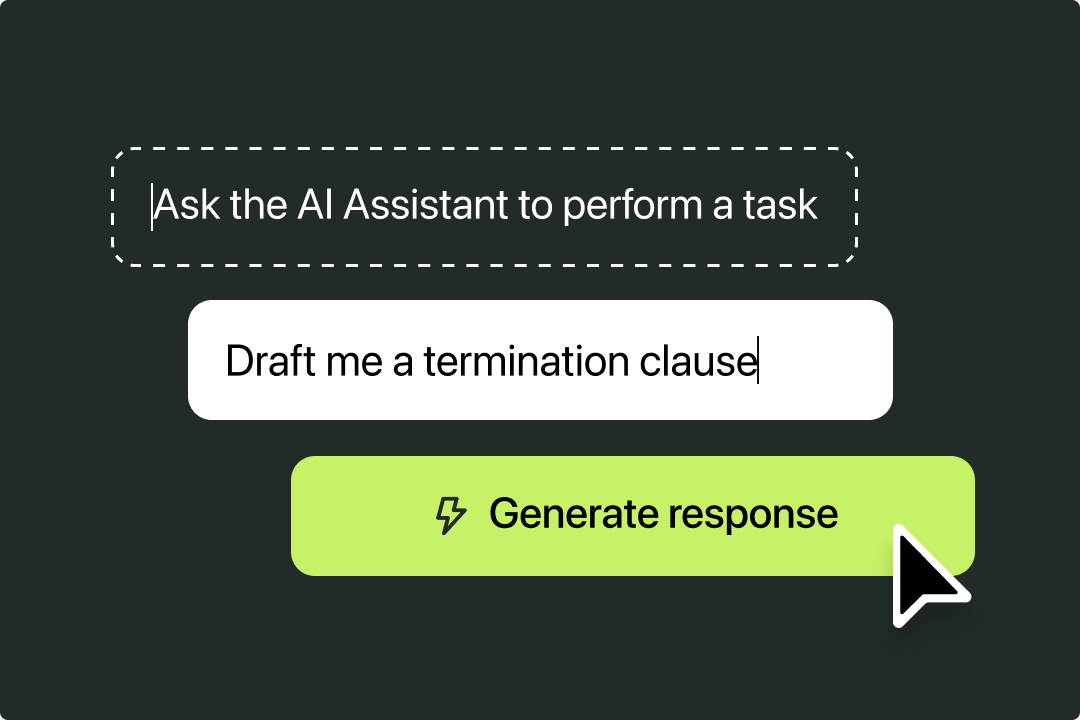
Auto-renewals are one of the most common sources of avoidable cost for finance teams.
A SaaS contract with a 60-day notice period that renews automatically for another 12 months because no one flagged the deadline is money wasted. In a business with dozens or hundreds of vendor contracts, it happens more often than most finance leaders would like to admit.
The best repository tools let contract owners configure alerts at multiple points before a deadline. The alert should go to the right person – not just legal, but the budget owner in finance or the business unit that owns the relationship.
Juro lets teams set automated contract reminders tied to key contract dates – renewal deadlines, notice periods, expiry dates – routed to the right person, not just a generic legal inbox.
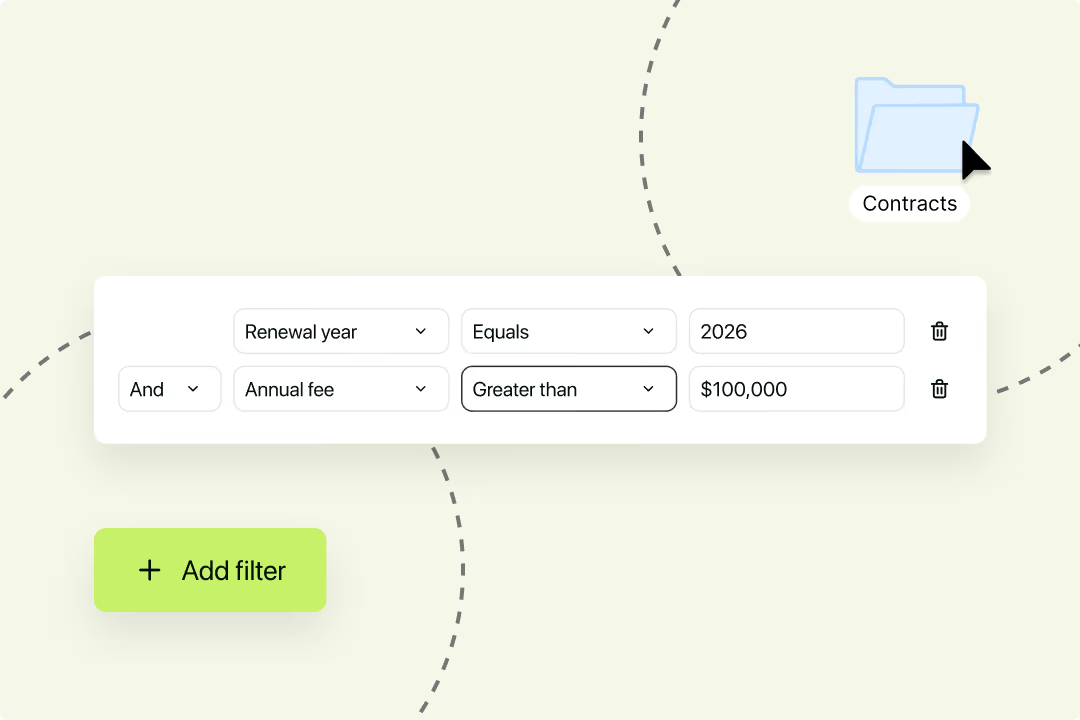
Because renewal date is often a structured field in the repository, finance can also run a live view of everything expiring in the next 30, 60, or 90 days at any point, without waiting for an alert to fire.
When a payment is due matters as much as how much is owed. A finance team building a cash flow forecast needs to know whether a vendor expects payment within 30 days of invoice, 60 days, or only once certain milestones are hit.
That information is sitting in contracts, not in the accounting system. It only becomes visible when someone opens each document and reads it.
A repository with AI data extraction can surface those terms automatically at upload and make them searchable across the entire contract portfolio: all contracts where payment falls due within 30 days, for example, grouped by spend category.
Juro's AI Extract automatically reads uploaded contracts – including third-party paper – and populates structured fields for payment terms, alongside contract value, dates, and counterparty.
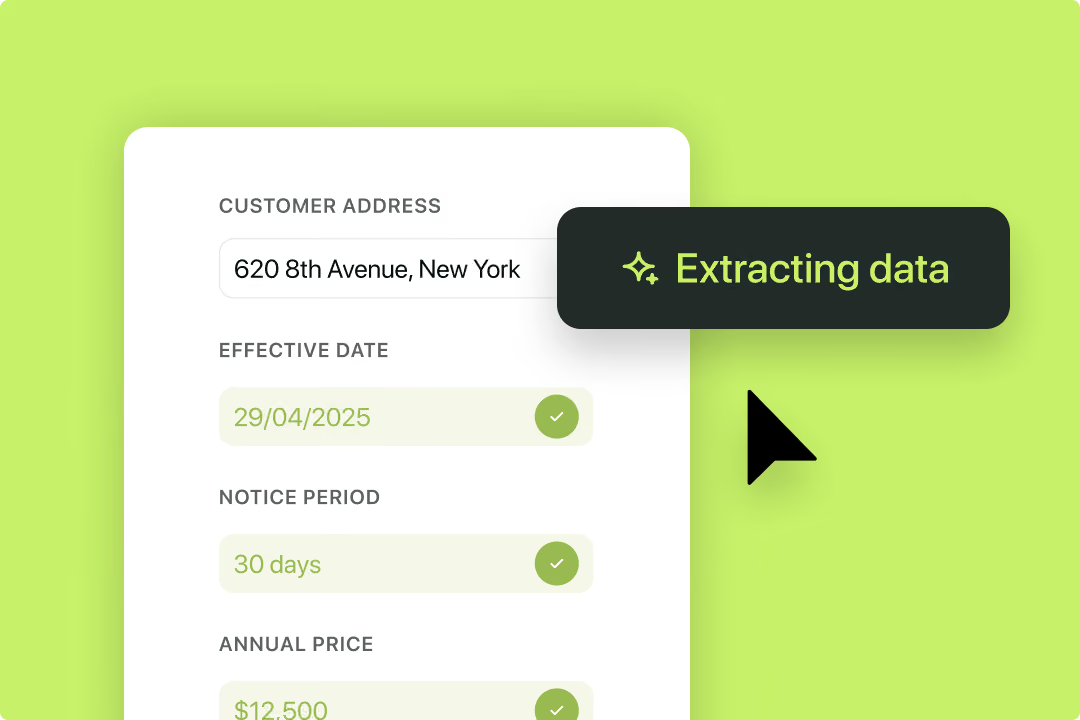
That means a backlog of legacy vendor agreements can be onboarded and made searchable without a manual data entry project.
Once extracted, payment terms are filterable across the full repository, giving finance the visibility it needs to build accurate cash flow forecasts.
Finance teams face a recurring set of situations where contract data needs to be assembled quickly and accurately: board reporting, investor due diligence, M&A data rooms, and regulatory audits.
Some certifications, for instance, expect organisations to demonstrate that all vendor contracts involving data processing are documented and accessible.
Pulling that together from a shared drive – finding the right version, confirming it was signed, checking it hasn't been superseded – is time-consuming and susceptible to mistakes under pressure.
A repository with a full contract audit trail (who accessed what, when, and what changed) also provides the kind of evidence an auditor or acquirer expects to see.
Every contract in Juro has a complete activity log – who created it, who edited it, who signed it, and when. Signed contracts are stored securely and tracked, so there's no question about which version is the final source of truth.
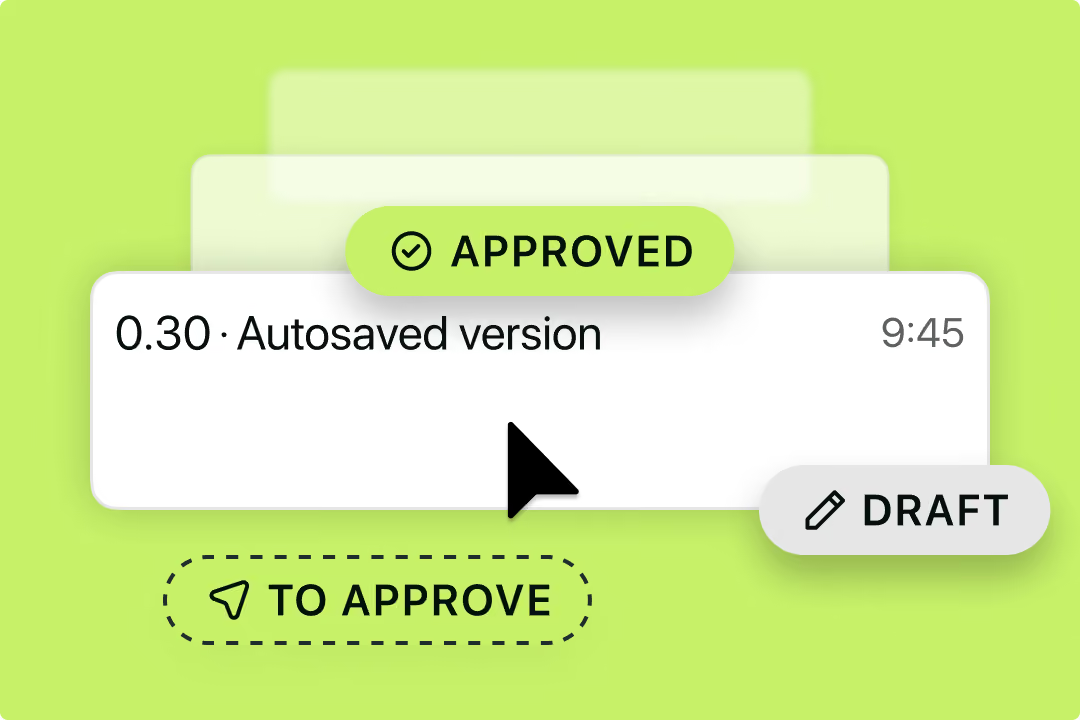
When a due diligence request comes in, finance can filter by contract type, entity, or counterparty and export the results in minutes rather than days.
On the revenue side, finance needs to reconcile committed revenue against what contracts actually say.
A sales rep may book a deal at a certain value, but the signed contract may include a ramp structure, a discount clause, a usage-based pricing tier, or a unilateral termination right that materially affects the recognized figure.
Finance teams that rely on CRM data alone – without checking it against the underlying contract – are forecasting on incomplete information.
A repository that links revenue contracts to structured data fields (total contract value, annual recurring revenue, start date, renewal type, termination provisions) gives finance a way to verify bookings and flag discrepancies before they become a problem at close.
Juro integrates directly with Salesforce and HubSpot, so revenue contracts are linked to CRM records from the moment they're created. Similarly, Juro integrates seamlessly with finance tools to push this key data into forecasting, and so on.
Finance can pull key contract data – value, start date, renewal type, termination clauses – without leaving their existing workflow, and cross-reference it against booked figures in the CRM.
Because contracts are created from standardized templates within Juro, the key commercial terms are consistent and structured, rather than buried in bespoke drafting that varies deal by deal.
Juro is an AI-native contracting system built for lean legal teams and the business functions they support, including finance.
Unlike the repository-only tools in this list, Juro covers the full contract lifecycle: creation, negotiation, signature, and then storage and management. That end-to-end coverage is what makes the repository more useful for finance: data is structured from the point of creation, not recovered after the fact.
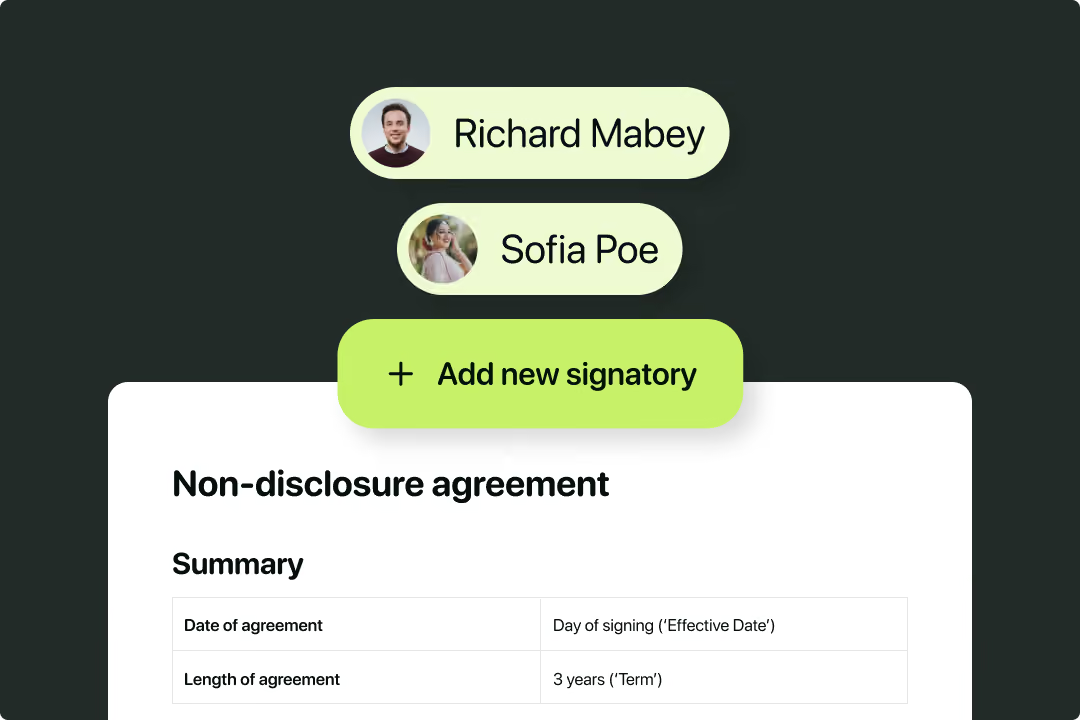
Juro also embeds in the tools finance and sales teams already use. Revenue contracts created in Salesforce or HubSpot are linked to contract records in Juro from the start, so finance can cross-reference booked figures against actual contract terms without switching tools.
Pricing is based on contract volumes, rather than per user, which means finance team members can have read access to contract data without adding to the cost. This also means Juro offers scalable and predictable pricing that finance teams often favour.
Juro is also easy to use and implement, cutting hefty implementation fees and other hidden add-ons out of the picture, which is a huge advantage for cost-conscious finance teams that have heard horror stories about costly enterprise CLM implementations.
Juro is rated 4.8/5 on Capterra, and 4.6/5 on G2, with the platform commonly adopted and loved by legal, business, and finance teams. This is clear from Juro's independent reviews and customer stories.
"Juro has really a wide array of features and contract rules and customization that really help streamline the contracting process. Templates are easy to use while allowing good control of contracts by legal and finance" - Head of Finance & verified Juro user, G2 review
"For years, I used Google Drive to store all of my documents, but things are much improved with Juro. The separate workspaces for different departments keep everything organized, the contract templates are easy to build, and the AI integration helps pull the information we need" - Verified Juro user, G2 review
Vanessa Fagard, Financial Planning & Analysis Manager at Convious shared how Juro turned a chaotic and disorganized contract process into 'clarity and consistency for the organization's contracts':
{{quote1}}
Trackado is a contract management tool built around tracking obligations, key dates, and spend across a contract portfolio. It is aimed at smaller businesses and operations teams who need contract visibility without a full CLM platform. In fact, it offers a free solution for solo users managing just 15 contracts annually and with just two custom fields.
It is among the most basic solutions on the market for legal and finance teams, lacking pre-signature contract management features and AI functionality that alternatives like Juro offer to automate data analysis and contract reporting.
Trackado's Business plan ($129/mo) covers eight users and 300 contracts, which is the entry point for most finance teams with meaningful contract volume. Enterprise ($299/mo) removes the contract cap and adds single sign-on, which matters for larger teams managing access across departments.
This makes Trackado one of the cheapest solutions on the market. Although, this is largely due to its repository-only feature set that only delivers value post-signature, not before.
Trackado has fewer reviews than some of the other repository tools on this list, but reviews mostly praise the tool's simplicity and ease of use:
"It’s simple and really powerful tool for contract management. The UI and UX for their dashboard is smooth and it’s not overwhelming in the eyes. You can navigate easily and it doesn’t feel clunky" - Verified Trackado user, Capterra review
"Simple to get started, reasonably priced and easy to handle for people managing large amount of contract data" - Verified Trackado user, Capterra review
ContractSafe is built around contract organization and search. Its core strength is making it easy to store, find, and set alerts on contracts, and it is designed to be simple enough for non-legal teams to use without much setup. For finance teams whose primary problem is visibility into existing contracts, it is worth evaluating.
ContractSafe offers three different plans, with their post-signature only functionality coming in at the lowest price of the three. However, their more expensive and advanced plans do offer functionality for the other stages of the contract lifecycle.
The vast majority of the reviews on ContractSafe's repository focus on the ability to keep visibility into contract deadlines at scale:
"The best thing about ContractSafe is that it has enabled my team to stay organised during times of pressure. It is very easy to forget about the things with numerous agreements and deadlines, and with everything recorded and getting reminders there is nothing that gets missed" - Verified ContractSafe user, G2 review
"I like ContractSafe as it provides us with the panoramic view of all our contracts and we can more easily prioritize and plan in advance. Everything is updated with automatic document capture of emails and storage systems" - Verified ContractSafe user, G2 review
LinkSquares is built largely around post-signature contract intelligence, with AI extraction capabilities being one of the core offerings. For finance teams dealing with a large backlog of legacy contracts and complex reporting requirements, it is a common option.
Higher than simpler repository tools, reflecting the depth of the analytics capability. Best suited to teams with significant contract volume who need serious reporting.
"The transparency in all of it makes the paper process so much easier. Also, I appreciate that LinkSquares lets you search through contract language after the fact and highlight risk" - Verified Linksquares user, G2 review
"What I like best about LinkSquares is how easy the platform is to use while still offering powerful functionality. The ability to run reports quickly and efficiently" - Verified Linksquares user, G2 review
Nomio is a contract repository service, not a CLM. Unlike the other tools in this list, Nomio's own team handles setup and ongoing maintenance: you upload your contracts, and Nomio organizes them, manually validates every data point, and auto-calculates key dates, including renewal notice deadlines that aren't explicitly stated in the contract.
It is purely post-signature, with no contract creation, negotiation, or eSignature functionality. This means that teams who also want to improve how contracts are created upstream will need a separate tool alongside it.
At the time of writing, Nomio's standard plan is priced at £12,400 per year for up to 200 contracts, with the price scaling with contract volumes and capped at standard data fields. Businesses wanting bespoke data fields will need to look at the Enterprise plan instead.
The teams most likely to be evaluating contract repositories in 2026 are lean: a general counsel or head of legal working alongside a finance function without dedicated legal ops resource. Here's what to prioritize to make implementation manageable:
The biggest friction point in any repository implementation is historical contracts. AI extraction tools have made this significantly faster. You can bulk upload PDFs and have key fields populated automatically rather than manually. Prioritize tools that handle this well.
A repository with 80 per cent of your contracts and accurate metadata is dramatically more useful than a spreadsheet with 100 per cent of your contracts and missing fields. Get running quickly and fill gaps over time.
If your finance team lives in Salesforce or HubSpot, a repository that surfaces contract data there will get used. One that requires them to log into a separate tool for every query will not.
Before you configure anything, get finance and legal to agree on the ten or so fields that matter most: contract value, counterparty, start date, end date, renewal type, notice period, payment terms. Build the repository around those fields first.

Before you finalize a decision, run through these questions:
Visibility and reporting
Data extraction
Alerts and renewals
Integrations
Access and compliance
Implementation and cost
Most finance teams don't have a contract data problem. They have a contract access problem. The data is there — in signed agreements, vendor contracts, and customer terms — but it's locked in documents rather than structured in a way that's queryable.
Unlike standalone repository tools, Juro covers the full contract lifecycle. That means contracts arrive in the repository already structured, payment terms are locked into templates from day one, and finance teams can query data across both executed contracts and those still in negotiation.
Juro's Operator is an AI agent that sits on top of the intelligent contract repository and lets finance teams ask questions about their contracts and get instant answers, without running manual reports or waiting for legal to dig out the relevant documents.
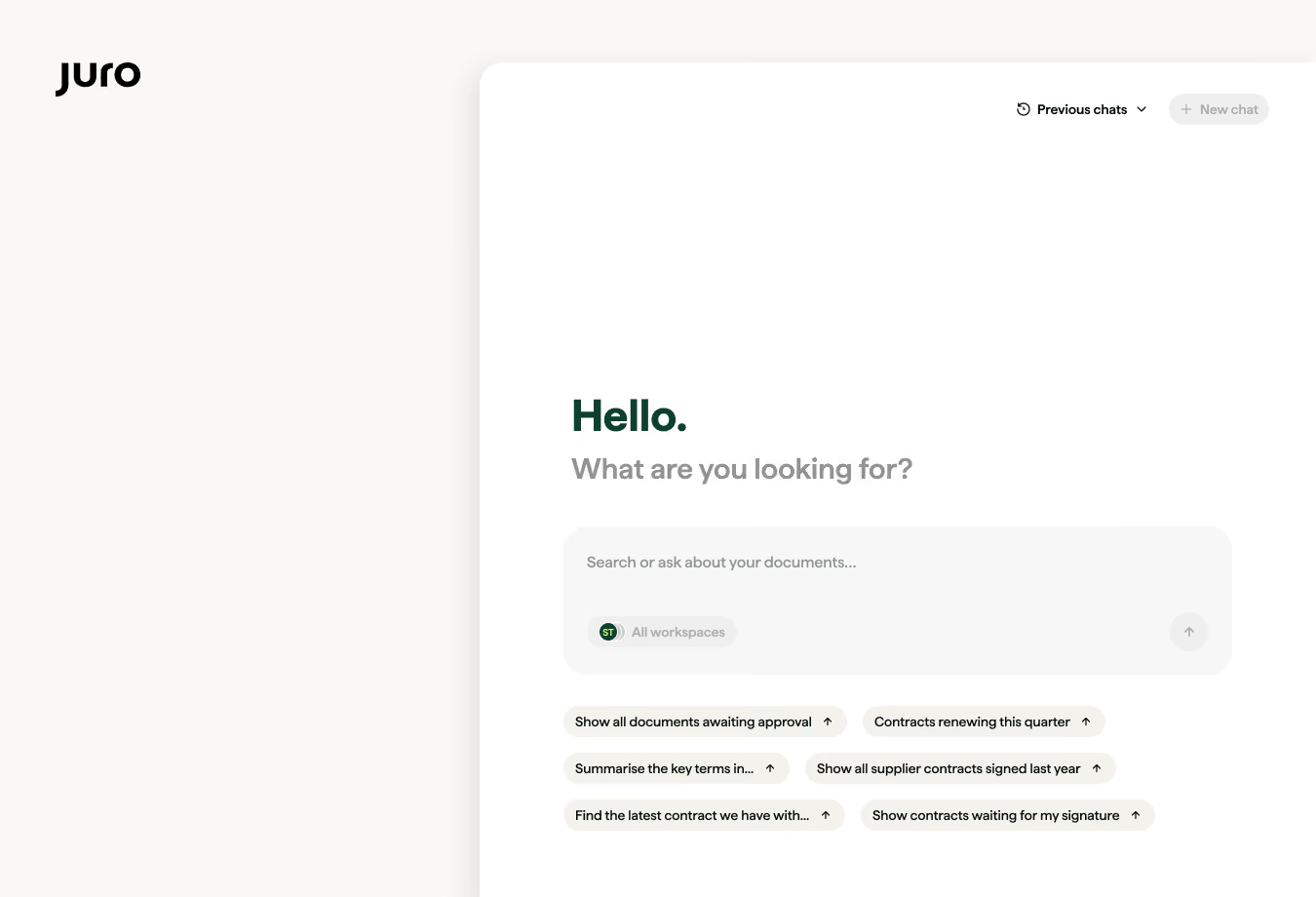
How much committed spend do we have with this vendor? Which contracts renew in Q3? Which agreements include automatic price escalation clauses?
Operator turns those questions into answers in seconds. That capability is stronger because of how Juro structures data upstream.
Contracts created in Juro are built as structured data from the start, and AI Extract populates metadata from uploaded third-party paper automatically. By the time a finance team runs a query through Operator, the underlying data is accurate and complete, not dependent on someone having manually entered it correctly.
Juro powers 2.5 million contracts for the world’s fastest-growing businesses. including Deliveroo, Trustpilot, and Pfizer. To see Juro in action, book your personalized demo today.

Lorem ipsum dolor sit amet, consectetur adipiscing elit. Suspendisse varius enim in eros elementum tristique. Duis cursus, mi quis viverra ornare, eros dolor interdum nulla, ut commodo diam libero vitae erat. Aenean faucibus nibh et justo cursus id rutrum lorem imperdiet. Nunc ut sem vitae risus tristique posuere.


Hello. We are Juro Online Limited (known by humans as Juro). Here's a summary of how we protect your data and respect your privacy.





Vanessa Fagard, FP&A Manager at Convious