





.svg)

.svg)
.svg)

🇺🇸 22 Boston Wharf Rd, Boston, MA 02210
🇬🇧 2 Pear Tree Court, London EC1R 0DS
© 2026, Juro. All rights reserved.


🇺🇸 22 Boston Wharf Rd, Boston, MA 02210
🇬🇧 2 Pear Tree Court, London EC1R 0DS
© 2026, Juro. All rights reserved.

The distinction between committed spend and actual spend sits at the heart of sound financial planning. And for most businesses, it's a gap that contracts quietly widen every quarter.
Actual spend is straightforward: the money that has already left your business. It shows up in bank statements, expense reports and accounting systems. It's historical, it's settled, and it's easy to measure.
If you paid $15,000 to a software vendor in January, that's actual spend.
Committed spend is the money your business is contractually obligated to pay in future, whether or not you've received the invoice yet. It's spend you've already agreed to, locked in through signed contracts – even if the cash hasn't moved.
If that same software vendor has an annual contract with a $15,000 renewal coming up in three months, and your contract auto-renewal clause kicks in unless you give 60 days' notice – that future $15,000 is committed spend, right now.
The distinction matters enormously for budgeting. Actual spend tells you where you've been. Committed spend tells you where you're going.
Every signed contract is a financial commitment. Some of those commitments are obvious; many aren't. Here are the most common ways contract terms translate into obligations on your balance sheet.
1. Payment schedules lock in when and how much you'll pay. A three-year SaaS agreement billed annually commits you to two more payments the moment you sign. Quarterly licences, monthly retainers, milestone-based payments for professional services - all of these create forward-looking spend obligations the moment ink (or eSignature) hits the page.
2. Autorenewal clauses are a particularly common source of surprise. Contracts that renew automatically unless cancelled before a notice period create rolling committed spend. Miss the notice window by a day and you've committed to another year. For businesses managing dozens or hundreds of vendor contracts, tracking these dates manually is a serious operational challenge.
3. Minimum spend commitments appear frequently in vendor agreements and master services agreements (MSAs). A contract might require you to purchase a minimum volume of services over 12 months, regardless of actual usage. If you've consumed 60 per cent of the minimum with two months to go, you have a committed spend obligation to honour - whether you use those services or not.
4. Volume-based pricing tiers can work in reverse, too. Contracts that price based on usage above a certain threshold create variable committed spend that's hard to forecast without visibility into the underlying terms.
None of these obligations sit in your accounting system until an invoice arrives. They live in your contracts.
Most finance teams are excellent at tracking actual spend. The tools for that job - ERP systems, accounting platforms, expense management software - are mature and widely adopted.
Committed spend is a different story. The data finance teams need to track it doesn't live in finance systems. It lives in commercial contracts. And for most businesses, those contracts are scattered across email inboxes, shared drives, legal team folders and individual laptops.
To build an accurate committed spend picture, finance teams typically need to know:
Gathering that information manually means hunting through documents, chasing legal and procurement teams, building spreadsheets that go stale within days, and hoping nothing slips through the gaps.
For a business with 50 active vendor contracts, that's a significant operational burden. For a business with 500, it's practically unmanageable.
The result is a finance function that makes budgeting decisions based on incomplete information - and that creates real risk.
When committed spend isn't visible, businesses over-commit in two directions.
The first is unplanned renewal spend. Contracts renew automatically, teams don't flag them, finance doesn't know they're coming, and the invoice lands as a surprise.
At the individual contract level, this might be a manageable inconvenience. Across a vendor portfolio, it can create material variance between forecast and actuals at the end of a budget period.
The second is shadow commitments built up over time. As businesses grow, they accumulate contracts through acquisitions, new team members buying tools without central procurement oversight, and legacy agreements that nobody is actively monitoring.
Each one carries financial obligations. Without a centralized view, those obligations compound invisibly until something forces them into the light - often a funding round, a contract due diligence exercise, or a budget shortfall.
Both risks are problems of visibility, not intent. Finance teams aren't failing to track committed spend because they don't care about it. They're failing to track it because the data is buried away in contracts they can't easily access or query.
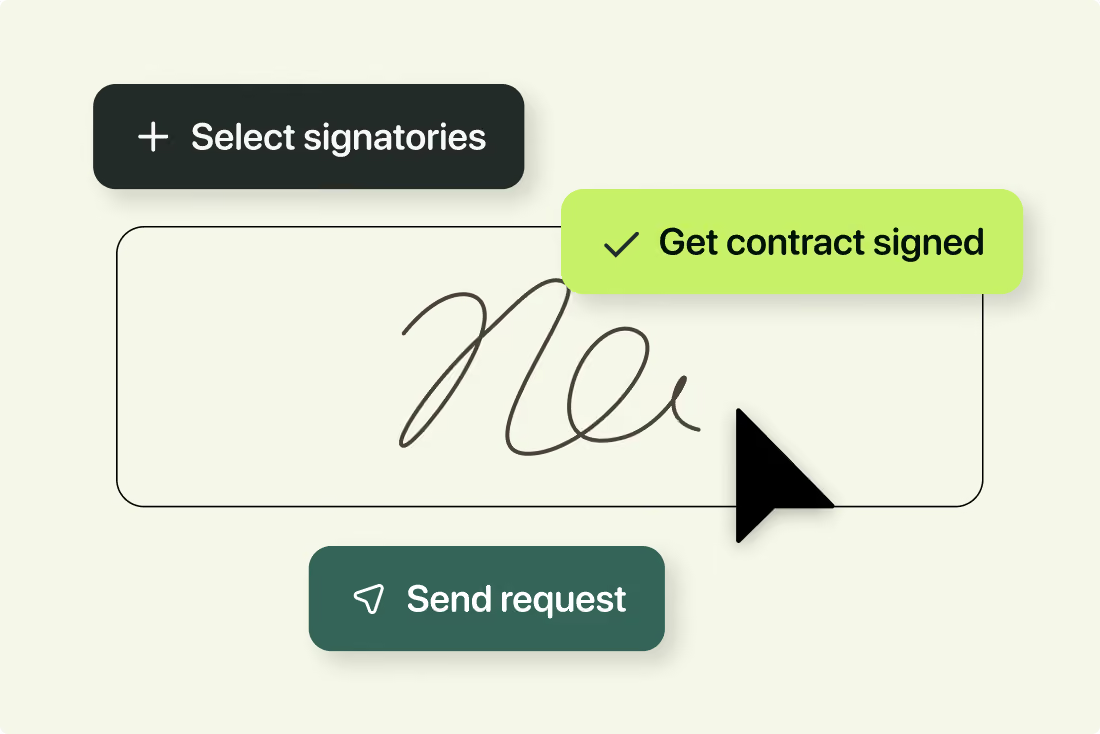
This is where contract lifecycle management (CLM) software changes the picture. Rather than treating contracts as static documents to be filed and forgotten, an intelligent contracting platform extracts the financial data that lives inside them and makes it available to the people who need it.
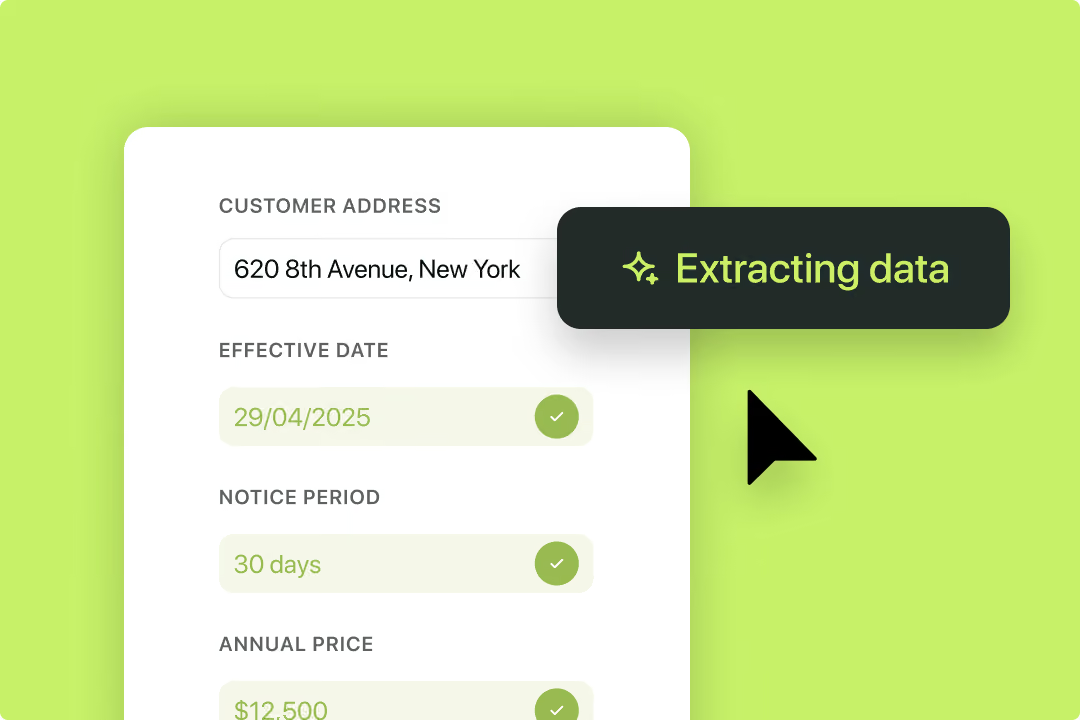
Juro, for example, extracts and surfaces key financial data from contracts - including payment terms and renewal dates - so finance teams can track committed spend without hunting through documents or spreadsheets. Instead of chasing legal for a copy of the vendor agreement to check the notice period, finance can query the data-rich contract repository directly.
For finance teams, this means:
That's why thousands of businesses use Juro to keep contract data visible across legal, finance and procurement.
{{quote2}}
Committed spend visibility isn't a technology problem alone. It also requires the three teams closest to contracts to share information effectively.
Procurement typically owns vendor relationships and negotiates contract terms. They know what's in the pipeline and what's about to be renewed. But without a shared system, that knowledge stays siloed until it's either too late or someone asks.
Legal holds signed contracts and understands the obligations within them. They're the source of truth for committed spend - but they're rarely set up to provide finance with the granular financial data it needs, especially at scale.
Finance needs the output of both: a complete, current picture of what has been committed, when it falls due, and what flexibility exists to adjust.

A few practical steps that help all three teams work from the same picture:
Committed spend data transforms financial forecasting from an estimate into a calculation.
When finance can see the full forward-looking payment profile of active contracts, budget forecasts become considerably more accurate. Discrepancies between forecast and actual spend shrinks because the sources of unplanned spend - surprise renewals, overlooked minimums - are visible before they hit the P&L.
This matters most at the start of annual budget cycles, when finance teams are building next year's plan. Without committed spend data, that plan is built on assumptions. With it, a significant portion of next year's spend is already known with high confidence.
It also matters during funding rounds and due diligence events. Investors and acquirers will want to understand the forward-looking financial obligations of the business. Being able to produce that picture quickly and seamlessly is a great look.
The practical implication for finance teams is this: if you can't answer the question "what have we committed to pay over the next 12 months?" quickly and accurately, the gap is almost certainly in your contract data. That's the problem worth solving first.
{{quote1}}
Juro's intelligent contracting platform gives finance, legal and procurement teams everything they need to track committed spend from within contracts, without the manual effort.
AI Extract pulls key financial data from contracts automatically, including payment terms, renewal dates, notice periods and minimum spend commitments, so you're never left hunting through documents.
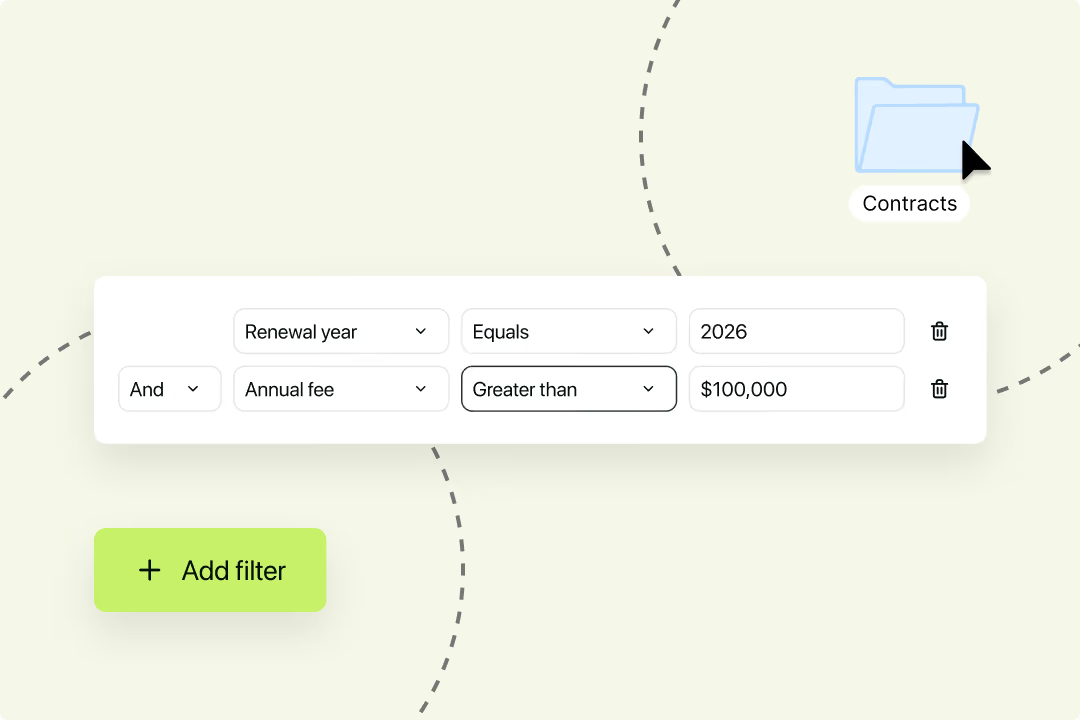
The intelligent repository brings all your contracts into one searchable, reportable source of truth. With Juro, teams can run reports instantly, rather than assembling them by hand at the end of a quarter.
Renewal alerts surface upcoming contract milestones before you're inside the notice window, turning surprise renewals into planned decisions.
Integrations embed Juro in the tools your team already uses - including Salesforce, Slack and your existing finance stack - so contract data flows to the people who need it without extra intervention and manual work.
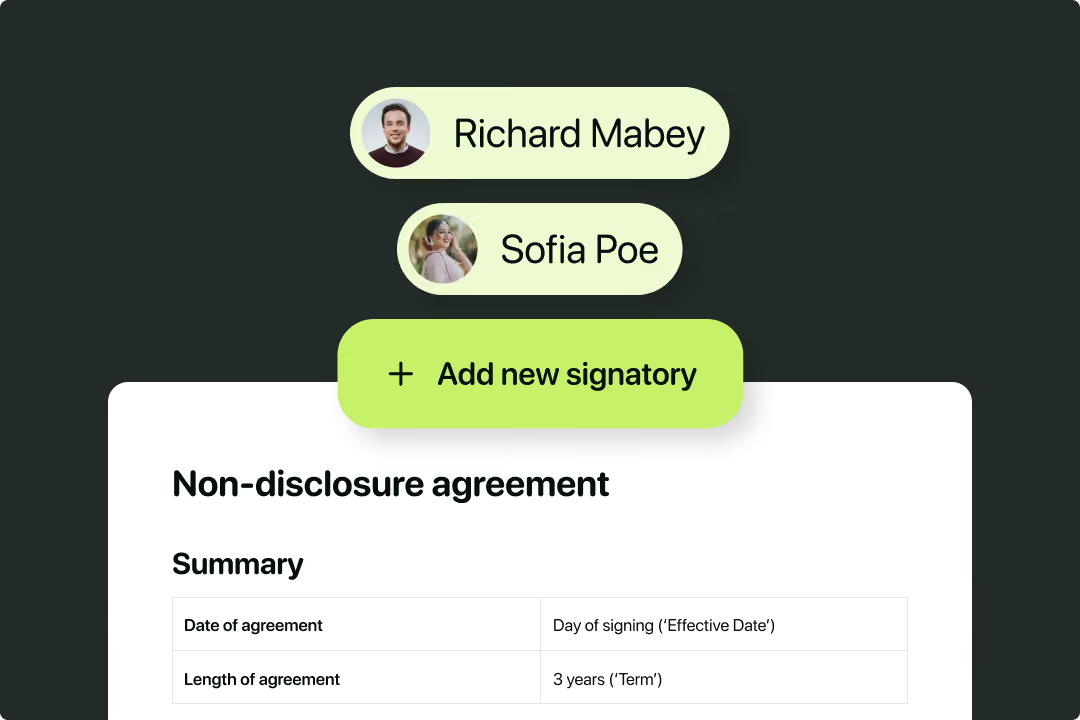
Juro's native eSignature functionality and end-to-end contract workflows mean new commitments are captured in the same system from day one, keeping your committed spend picture complete and current.
If you're ready to stop reconciling contracts in spreadsheets and start making budget decisions on accurate, real-time data, book a demo with Juro to see how it works.

Lorem ipsum dolor sit amet, consectetur adipiscing elit. Suspendisse varius enim in eros elementum tristique. Duis cursus, mi quis viverra ornare, eros dolor interdum nulla, ut commodo diam libero vitae erat. Aenean faucibus nibh et justo cursus id rutrum lorem imperdiet. Nunc ut sem vitae risus tristique posuere.


Hello. We are Juro Online Limited (known by humans as Juro). Here's a summary of how we protect your data and respect your privacy.





Okechukwu Eke, General Counsel at Moniepoint

Vanessa Fagard, FP&A Manager at Convious