


🇺🇸 22 Boston Wharf Rd, Boston, MA 02210
🇬🇧 2 Pear Tree Court, London EC1R 0DS
© 2026, Juro. All rights reserved.


🇺🇸 22 Boston Wharf Rd, Boston, MA 02210
🇬🇧 2 Pear Tree Court, London EC1R 0DS
© 2026, Juro. All rights reserved.

Use this franchise agreement template to help draft your franchise contracts.



"It takes the sales team four clicks to generate and approve a contract in Juro. We're saving 25 minutes per contract."
Read Paddle's customer story >

Chris McFalls,
Rev Ops
"With Juro, approvals take less than two hours, and most contracts are fully signed within a day of being sent"
Read Goldin’s customer story >

Kyle Piper,
Contracts Manager
"Everyone works out of Juro - it's the key tool we use to do our job"
Read ANC’s customer story >


Franchising is a strategic way to grow a brand and its presence.
Central to this growth is the franchise agreement, a document that not only formalizes the relationship between franchisor and franchisee but also serves as a blueprint for the operational and financial aspects of the franchise.
A franchise is a type of business relationship where a business owner (the franchisor) grants to an individual or company (the franchisee) the rights to operate a business using the franchisor's brand, trademark, and business model.
In return for these rights, the franchisee usually pays the franchisor an initial start-up fee and ongoing licensing fees or royalties.
A franchise agreement is a legally binding contract that establishes a franchisor's relationship with a franchisee. It outlines the rights granted to the franchisee, including the use of trademarks, business models, and systems, in exchange for financial compensation to the franchisor.
This agreement is the foundation upon which the expectations and responsibilities of both parties are built.
The agreement's primary purpose is to safeguard the franchisor's intellectual property and ensure the franchisee operates within the established brand parameters.
It delineates the scope of support from the franchisor, the operational standards to be maintained, and the financial commitments required from the franchisee. Ultimately, it's designed to protect the brand's integrity while fostering a profitable and sustainable partnership.
Consider utilizing a franchise agreement template in the following scenarios:

Typically, the franchisor's legal team is responsible for managing Franchise Agreements. However, franchisees must also understand and negotiate terms, often with the assistance of their legal advisors.
A comprehensive franchise agreement template should cover:

The franchisor's legal team drafts the agreement using a template as a starting point, customizing it for the specific franchisee.
The draft undergoes review by various stakeholders, including management and legal advisors, to ensure it aligns with the brand's standards and legal requirements.
The franchisee, often with legal counsel, reviews and negotiates terms, leading to a final agreement acceptable to both parties.
Once agreed upon, the contract is signed, often with electronic signatures, making it a legally binding document.
The franchisor oversees the agreement's execution, ensuring the franchisee complies with the terms throughout the contract's duration.
At the end of the term, the contract is either renewed or terminated, with obligations fulfilled and any final settlements addressed.

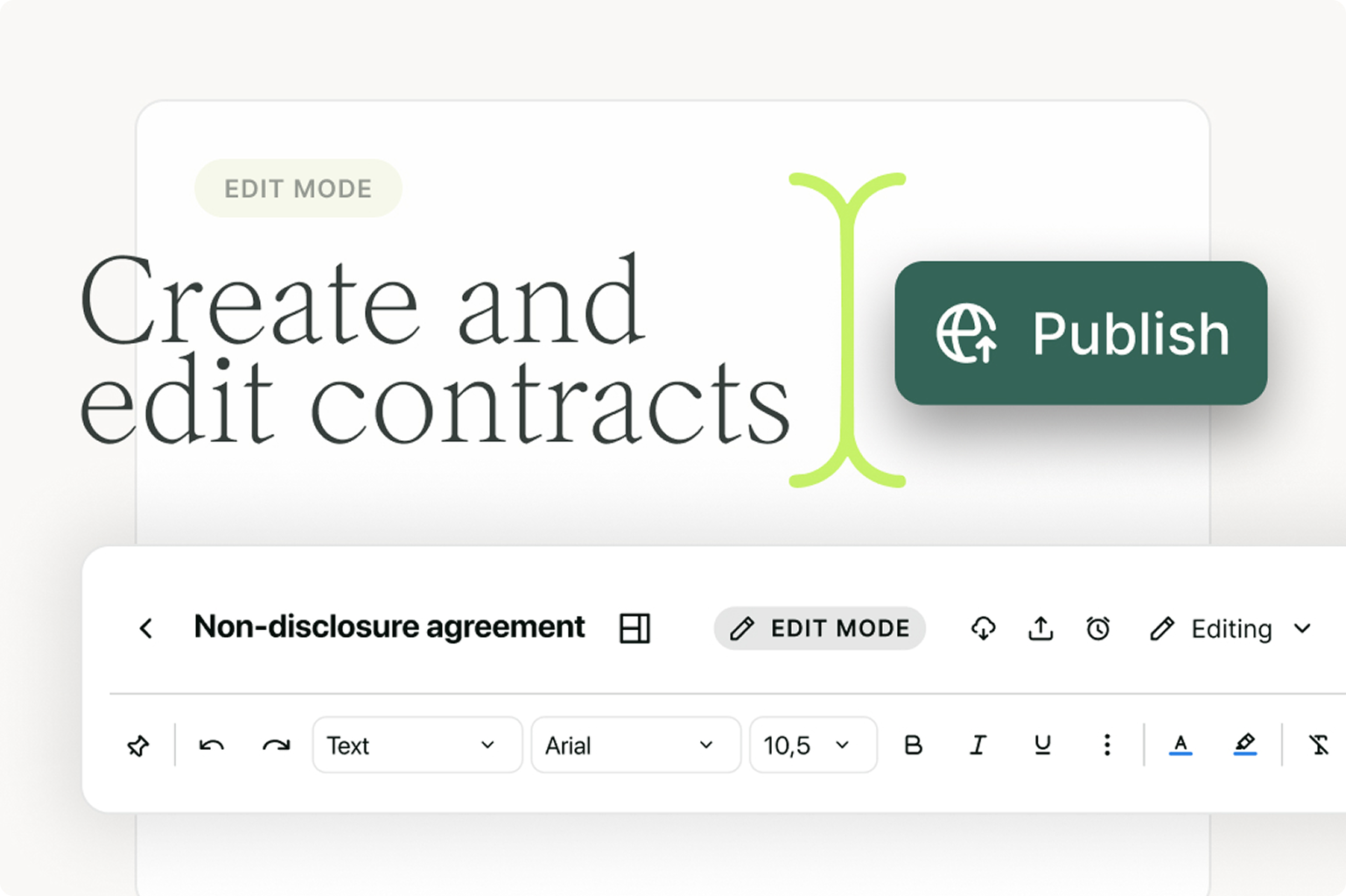
Contract management software like Juro can significantly streamline the creation and management of franchise agreements. Automation features include:
Franchise agreements formalize the relationship between a franchisor and a franchisee. By clearly defining the terms and expectations, it ensures the integrity of the brand and the success of the individual franchise.
Utilizing a template and embracing automation can save time, reduce errors, and maintain consistency across all of your contracts.
To book a personalized demo, click below.
A franchise agreement is the contract under which a franchisor lets a franchisee run a business using its brand and operating system. It records what the franchisee can use and where, and what they pay in return, usually an upfront fee plus ongoing royalties.
Usually, yes. Even one franchised outlet trades under your brand, so you need a written agreement that controls how the franchisee uses it and lets you end the relationship if standards slip. An informal arrangement where someone pays you to trade under your brand with your support can still count as a franchise under US law, with the disclosure duties that come with it.
In the US, the FTC Franchise Rule normally requires the franchisor to give a prospective franchisee a Franchise Disclosure Document at least 14 days before they sign or pay anything. The document sets out the fees and the franchisor's financial position, among many other disclosures. Some states also require franchisors to register before they sell, so check the rules in each state where you plan to operate.
A licensing agreement gives someone the right to use intellectual property, such as a brand or a piece of software, and usually leaves them free to run their business their own way. A franchise agreement goes further, because the franchisee also adopts the franchisor's operating system and has to follow its standards and training.
Ask for a clearly defined territory, marked on a map or by zip codes, and a promise that the franchisor won't open or license another outlet inside it. Check whether the protection covers online and delivery sales, because that's where territory disputes often arise. Franchisors often tie exclusivity to sales targets, so make sure any targets are realistic before you accept them.
The agreement should say whether the franchisee has a right to renew and on what terms, since some franchisors require a new agreement at their current fees. At the end, franchisees normally have to stop using the brand and return confidential material, and many agreements add a non-compete for a set period. How far a post-term non-compete can be enforced varies by state, so check it before you rely on it.
It's a sound starting point, but franchise terms depend heavily on your system, so tailor the fees and territory to each franchisee and check the disclosure rules where you operate. For specific legal advice on your contract templates, consult an attorney.
Build your franchise agreement template in Juro once and generate each franchisee's contract from it, with your team adding the location and fee details that change each time. When you update your royalty structure or territory rules, you change that one template and every new agreement follows. Signed agreements sit in one place you can search, so you can see renewal dates across your whole network.
Yes. Operator, the AI drafting feature in Juro, writes a new franchise agreement template based on what it learns from your existing contracts, from your drafting style to the positions you usually take on terms like territory and termination. Your legal team approves the first draft before it goes to any franchisee, so the template reflects your risk appetite.
Answer
Juro is the #1-rated contract platform for speed of implementation — connect your CRM, automate templates, and close deals without the paperwork.
Book a personalised demo

Hello. We are Juro Online Limited (known by humans as Juro). Here's a summary of how we protect your data and respect your privacy.