

🇺🇸 22 Boston Wharf Rd, Boston, MA 02210
🇬🇧 2 Pear Tree Court, London EC1R 0DS
© 2026, Juro. All rights reserved.


🇺🇸 22 Boston Wharf Rd, Boston, MA 02210
🇬🇧 2 Pear Tree Court, London EC1R 0DS
© 2026, Juro. All rights reserved.

This free catering contract template will ensure the client and caterer are on the same page regarding the services to be provided, the cost, and other crucial details.



"It takes the sales team four clicks to generate and approve a contract in Juro. We're saving 25 minutes per contract."
Read Paddle's customer story >

Chris McFalls,
Rev Ops
"With Juro, approvals take less than two hours, and most contracts are fully signed within a day of being sent"
Read Goldin’s customer story >

Kyle Piper,
Contracts Manager
"Everyone works out of Juro - it's the key tool we use to do our job"
Read ANC’s customer story >


Catering contracts are essential for ensuring that both the client and the caterer are on the same page regarding the services to be provided, the cost, and other crucial details.
Whether you're a caterer or someone looking to hire catering services, understanding the nuances of a catering contract is vital. Let's dive in.
A catering contract is a legal agreement between a client and a caterer that outlines the terms and conditions under which catering services will be provided for an event.
This contract ensures that both parties have a clear understanding of what is expected, from the menu items to the number of guests and payment terms.
Catering contracts are essential for events like weddings, corporate gatherings, birthdays, and other special occasions where food and beverage services are outsourced. They help in setting clear expectations and prevent potential disputes.


Modern businesses and caterers are looking to automate routine contracts like catering agreements to save time and reduce errors. With automated templates, creating a catering contract becomes a breeze. Here's how:
Contract automation can see an increase in the following across your business.

It's uncommon these days for event management teams not to have a catering contract template at their disposal.
Most businesses will have crafted templates for standard contracts like catering agreements and stored them in shared drives for event coordinators to access.
Having a catering contract template on hand and ready for customization eliminates the need for event planners to wait for legal team input when finalizing the details for an event. This accelerates the event planning process and ensures that all catering needs are met promptly and efficiently.
Furthermore, this approach ensures that the majority of catering contract terms are standardized, reducing the potential for errors and inconsistencies.
Contract management software can alleviate this burden by automating the contract administration tasks that sales teams spend the most time on. An automated solution can help organizations to manage complex catering contracts more efficiently using the following features:
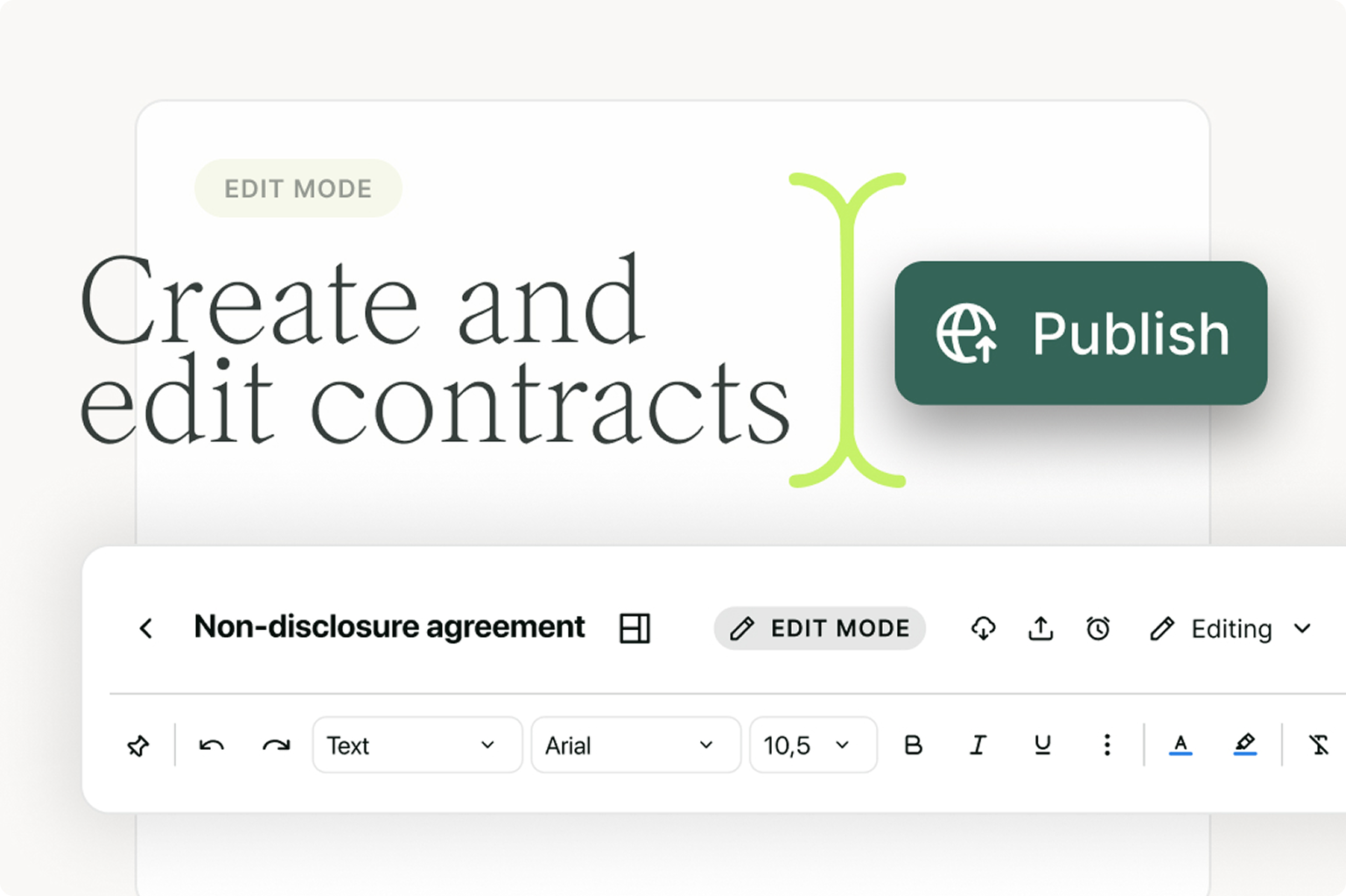
Automated contract templates. Project managers can use Juro's unique browser-based editor, purpose-built for contracts, to create easy-to-use templates they can use to generate contracts in seconds.
Mass generation. Bulk actions allow sales teams to create, auto-fill, and send out catering contracts for signing by the dozens or hundreds, saving countless hours of repetitive work.
Mobile-responsive eSignature. Clients can quickly sign catering contracts on any device, as soon as they've read and received them using the software's native eSignature feature.
In-platform commenting: Catering contracts can sometimes be confusing for clients, but the software's in-browser contract negotiation features allow clients to add questions and comments directly onto the contract for review.
Juro streamlines the entire contract procedure, allowing businesses to automate up to 75% of contract administration and finalize catering contracts up to ten times quicker.
If crafting and overseeing catering contracts are posing challenges for your business, click the button below to discover how Juro can assist you today.
A catering contract template is a ready-made agreement that a caterer or its client can adapt for each event. It records what food and service the caterer will provide and for how many guests, along with the price and when payment is due.
Usually, yes. Even a small order normally involves a deposit and a fixed date, and a short written agreement settles who pays if the event moves or numbers drop. Without one, a disagreement about what was promised comes down to memory or an email chain.
A service agreement covers general services, so it focuses on scope and performance standards over a period of time. A catering contract is built around a single event or a regular food order, so it focuses on the menu and the guest count. It also needs clear rules for a change of date, which a general service agreement may not cover.
The final guest count is the number of guests the client confirms a set number of days before the event, and the caterer usually charges for that number even if fewer people turn up. Agree the deadline in the contract, and whether the client can add guests after it at an extra cost.
Check how much of the deposit you get back and how that changes as the event gets closer, since many caterers keep the deposit once they've bought food or turned down other bookings. Also look for a clause covering events called off for reasons outside either party's control, so it's clear who bears the cost.
It works well as a starting point, but you'll need to add the event details and payment schedule for each booking and remove any clauses that don't fit. If you serve alcohol, check the licensing rules where the event takes place. For specific legal advice on your contract templates, consult an attorney.
Create the template in Juro once, and your events or sales team can produce a contract for each booking by filling in the event details and the price. When you change a standard term, such as your deposit policy, you update the template and every new contract picks it up. Signed contracts are stored together, so you can search them for event dates and final payment deadlines.
Yes, through Operator, the AI drafting feature in Juro, which builds new templates from your existing contracts. It learns how you draft and the positions you usually take on terms like deposits and cancellation, so the first draft reflects your risk appetite. Someone on your legal team approves that draft before it goes into use.
Answer
Juro is the #1-rated contract platform for speed of implementation — connect your CRM, automate templates, and close deals without the paperwork.
Book a personalised demo

Hello. We are Juro Online Limited (known by humans as Juro). Here's a summary of how we protect your data and respect your privacy.