

.svg)

.svg)
.svg)

🇺🇸 22 Boston Wharf Rd, Boston, MA 02210
🇬🇧 2 Pear Tree Court, London EC1R 0DS
© 2026, Juro. All rights reserved.


🇺🇸 22 Boston Wharf Rd, Boston, MA 02210
🇬🇧 2 Pear Tree Court, London EC1R 0DS
© 2026, Juro. All rights reserved.

Download a free Airbnb rental agreement template covering house rules, deposits, occupancy limits, and cancellation terms. Built for hosts and property managers.



"It takes the sales team four clicks to generate and approve a contract in Juro. We're saving 25 minutes per contract."
Read Paddle's customer story >
.avif)
Chris McFalls,
Rev Ops
"With Juro, approvals take less than two hours, and most contracts are fully signed within a day of being sent"
Read Goldin’s customer story >.png)
.avif)
Kyle Piper,
Contracts Manager
"Everyone works out of Juro - it's the key tool we use to do our job"
Read ANC’s customer story >


Airbnb's own terms of service govern the platform relationship between hosts and guests, but they don't replace a standalone rental agreement between the parties. The platform sets the booking framework. The rental agreement is where hosts set the rules, allocate liability, and create a legally enforceable record of what was agreed before a guest sets foot in the property.
For occasional hosts renting a single property a few times a year, a clear, well-structured agreement is good practice. For professional hosts and property managers running multiple listings, it becomes a practical necessity for managing risk and ensuring consistency across bookings.
An Airbnb rental agreement is a short-term rental contract between a host and a guest that supplements the Airbnb booking. It defines the specific terms of the stay: check-in and check-out times, house rules, security deposit arrangements, what constitutes damage, how disputes will be handled, and what law governs the agreement.
It is distinct from a standard lease agreement in both duration and legal character. A lease typically creates an ongoing tenancy with the protections that come with it, including notice periods, security deposit regulations, and in many jurisdictions tenant rights that are difficult to waive.
A short-term rental agreement is designed for transactional, time-limited stays and operates under a different legal framework, though the exact rules depend heavily on the jurisdiction where the property sits.
The Airbnb platform does not automatically provide hosts with a standalone rental agreement. What Airbnb provides is a booking confirmation, universal terms and conditions, a cancellation policy framework, and access to its resolution center. None of these replace a properly drafted agreement between host and guest.
Not legally required in every jurisdiction, but strongly worth having. Here is when the case for using one becomes compelling.
If you care about noise limits, maximum occupancy, whether guests can bring additional visitors, use of outdoor spaces, or parking rules, the place to document and enforce those rules is a signed agreement, not a listing description that a guest may not have read carefully.
A hot tub, a pool, a rooftop terrace, or a home gym each creates its own liability exposure. If a guest is injured using a feature of your property, having clearly documented rules for its use and a waiver of certain claims is far more useful than silence.
Airbnb's security deposit function operates within Airbnb's own claim process, which has its own timelines and limitations. A standalone rental agreement can set out what the deposit covers, how damage will be assessed, and the timeline for returning or withholding it independently of the platform.
The more properties and bookings involved, the more important consistency becomes. A template-based rental agreement that is sent to every guest creates a repeatable, auditable process rather than a patchwork of informal arrangements.
Guests who smoke indoors, throw unreported parties, or dispute damage claims are an established occupational hazard of short-term hosting. A signed agreement is the starting point for any meaningful dispute resolution.

House rules posted in a listing description are not a signed contract. A guest who violates a rule they claim not to have seen is difficult to hold accountable without a signed document confirming they received and accepted the terms.
An agreement that says guests are responsible for "any damage" without defining what that means or distinguishing it from normal wear and tear creates disputes rather than preventing them. The agreement should be specific about what counts as damage, how it will be evidenced, and the timeline for making claims.
The most common source of serious property damage in short-term rentals is unauthorized parties. An agreement that sets a maximum occupancy, explicitly prohibits events without prior consent, and specifies consequences for breach provides a contractual basis for claims that a vague house rules list does not.
If the agreement's deposit terms contradict how the platform handles security deposits, guests will default to the platform's process when disputes arise. Deposit provisions should be consistent with the platform's framework or clearly address how they operate alongside it.
A standard residential lease is not appropriate for short-term Airbnb-style bookings. The legal framework is different, many standard tenancy clauses are irrelevant or counterproductive in a short-term context, and using the wrong template creates confusion rather than clarity.
Individual hosts sending a rental agreement for each booking can manage the process manually without too much difficulty. The challenge grows with the number of properties and bookings. Property managers running multiple listings across different locations need agreements that are consistent, quick to generate and send, and organized enough that signed copies are retrievable when a dispute arises.
The operational failure mode in short-term rental management is not usually drafting. It is consistency and storage. Agreements generated from different template versions, signed copies scattered across email inboxes, and no clear record of which guests signed which terms make dispute resolution considerably harder than it needs to be.
Placemakr, an apartment hotel operator managing properties across the US, experienced exactly this problem before implementing Juro.
Their sales team was jumping between Word, DocuSign, and SharePoint to generate and store rental agreements, with no single source of truth.
After consolidating their contract process in Juro, they saved 50 per cent of the time previously spent on contracts, and were able to consolidate multiple location-specific templates into a single dynamic template that adapted automatically based on the property details.
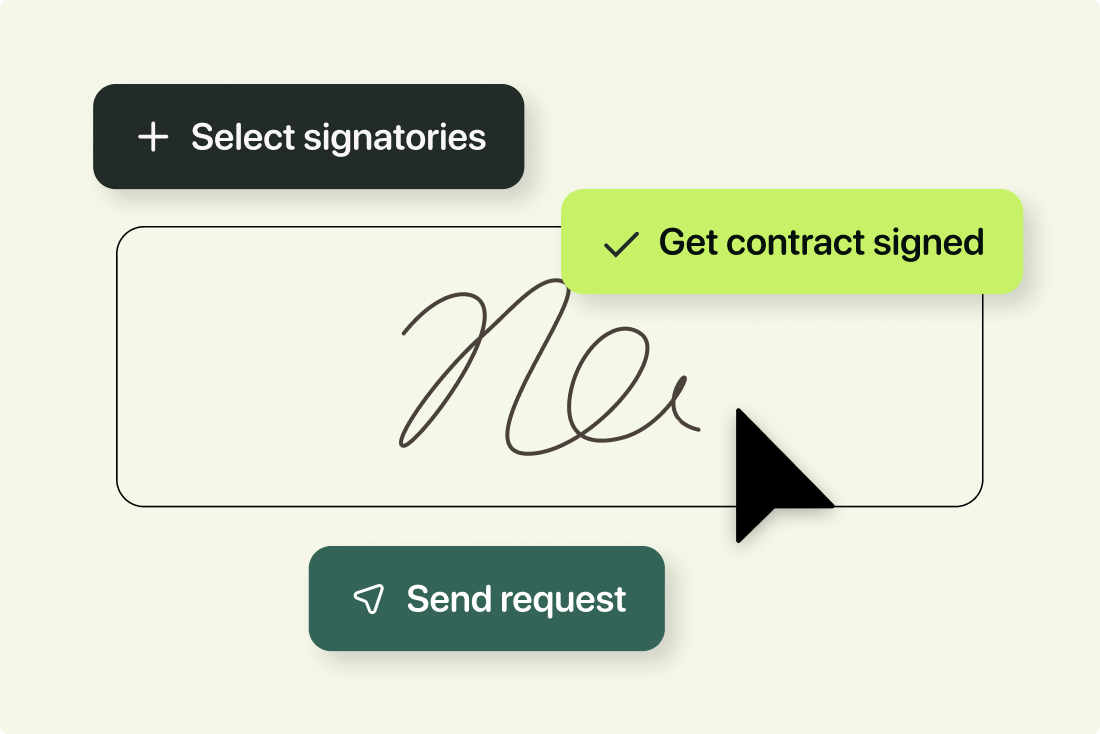
For property managers handling significant booking volumes, Juro's contract platform lets teams build rental agreement templates with structured fields for booking dates, deposit amounts, and house rules.
Those agreements can be generated and sent quickly for each booking, and signed copies are stored searchably so that the terms agreed with any given guest are immediately accessible. If you'd like to see how Juro supports property and hospitality teams, book a demo or join the community to hear how other teams manage rental agreements at volume.
An Airbnb rental agreement is a contract between a host and a guest that sits alongside the platform booking and sets the terms of the stay. It covers points such as occupancy limits, house rules, the security deposit and what counts as damage, so both sides know the rules before check-in.
Before check-in, ideally soon after the booking is confirmed, so the guest has accepted the rules before they arrive. Mention in your listing that guests will be asked to sign an agreement, so the request doesn't come as a surprise after they've paid. An electronic signature makes this quick for guests booking from their phone.
Check local rules first, because in many places a stay beyond a set number of days can give the guest some of the rights of a tenant. For longer stays, a lease agreement is often the better fit, since it deals with notice periods and rent in the way the law expects. Keep this template for short, time-limited bookings.
Set out the deposit amount, what it covers, how you'll evidence damage and when you'll return it. Make sure those terms work alongside the platform's own damage claim process, because guests will usually fall back on the platform's rules if the two conflict. Photos of the property taken before and after each stay make any claim much easier to support.
Yes, and the agreement is the right place for rules on using features that carry a risk of injury. Waivers usually have limits, though, and in many places they won't protect a host from claims caused by the host's own negligence. Treat the waiver as one layer of protection alongside safe equipment and suitable insurance.
It's a sound starting point, but add the house rules and features specific to your property, and check the short-term rental rules where the property is located. For specific legal advice on your contract templates, consult an attorney.
Property managers can build one rental agreement template in Juro and generate an agreement for every booking, with the booking dates and deposit amount filled in each time. When a house rule or your cancellation terms change, you update the template once and every new booking uses the new version. Signed agreements are stored in one place, so you can quickly find what a guest agreed to if a damage claim comes up.
Yes. In Juro, Operator can draft a rental agreement template like this one from your existing contracts, following your drafting style and the positions you usually take on deposits and damage. Your legal team reviews and approves the first draft before it goes to any guest, so it reflects your risk appetite.
Answer
Juro is the #1-rated contract platform for speed of implementation — connect your CRM, automate templates, and close deals without the paperwork.
Book a personalised demo

Hello. We are Juro Online Limited (known by humans as Juro). Here's a summary of how we protect your data and respect your privacy.