

.svg)

.svg)
.svg)

🇺🇸 22 Boston Wharf Rd, Boston, MA 02210
🇬🇧 2 Pear Tree Court, London EC1R 0DS
© 2026, Juro. All rights reserved.


🇺🇸 22 Boston Wharf Rd, Boston, MA 02210
🇬🇧 2 Pear Tree Court, London EC1R 0DS
© 2026, Juro. All rights reserved.

Download a free MSA template and learn what it should include, common drafting pitfalls, and how to manage MSAs at scale without the usual friction.



"It takes the sales team four clicks to generate and approve a contract in Juro. We're saving 25 minutes per contract."
Read Paddle's customer story >
.avif)
Chris McFalls,
Rev Ops
"With Juro, approvals take less than two hours, and most contracts are fully signed within a day of being sent"
Read Goldin’s customer story >.png)
.avif)
Kyle Piper,
Contracts Manager
"Everyone works out of Juro - it's the key tool we use to do our job"
Read ANC’s customer story >


MSA stands for Master Services Agreement, a contract that sets the overarching terms governing an ongoing commercial relationship between two businesses.
Get it right upfront, and every deal that follows moves faster. Get it wrong, and you'll spend years renegotiating the same points on every transaction.
Download Juro's free Master Services Agreement template below, or keep reading to understand what a strong MSA covers, where commercialand legal teams often go wrong, and how to stop MSAs becoming a bottleneck for your business.
A Master Services Agreement is a contract that establishes the baseline terms for a B2B relationship: how disputes will be resolved, who owns intellectual property, how liability is allocated, how data will be handled, and so on.
Individual transactions then sit underneath it, documented in separate order forms, statements of work, or schedules. The MSA doesn't need to be reopened every time a new piece of work begins. That's the point of it.
In business, an MSA is most commonly used in B2B SaaS, professional services, consulting, outsourcing, and any relationship where the parties expect to transact repeatedly over time. If you're signing a one-off deal with a vendor you'll never work with again, you probably don't need one. If you're building an ongoing commercial relationship, you almost certainly do.
An MSA and a Statement of Work (SOW) work together but serve different purposes. The MSA governs how the relationship operates: the rules, protections, and fallback positions that apply across every engagement. The SOW sits underneath it and describes what's actually being done in a specific engagement, including deliverables, timelines, fees, and acceptance criteria.
Think of the MSA as the rules of engagement and the SOW as the transaction. You negotiate the MSA once (or rarely). You create a new SOW for each piece of work. For a fuller breakdown, see MSA vs SOW: what's the difference?
A Service Level Agreement (SLA) defines performance standards: uptime commitments, support response times, resolution targets. It can exist as a standalone document or as a schedule to an MSA, but it's narrower in scope.
An SLA tells you what quality of service to expect; an MSA tells you what happens when things go wrong, who owns what, and how the relationship operates overall.
In practice, SaaS and professional services agreements often include both: an MSA covering the commercial relationship and an SLA covering service quality. The two are complementary, not interchangeable.
An NDA (Non-Disclosure Agreement) is concerned with one thing: protecting confidential information exchanged between parties. An MSA is broader. It governs the full commercial relationship and typically includes confidentiality provisions as one section among many.
Some parties sign an NDA early in a relationship before commercial terms are agreed, then fold equivalent confidentiality obligations into the MSA once the deal is done. Others rely on the MSA's confidentiality section alone. Either approach works, but the two documents shouldn't conflict if both are in place.
The depth of an MSA varies depending on the relationship, the industry, and the relative bargaining positions of the parties. But most well-drafted MSAs will address the following.
A high-level description of what the vendor is providing. This doesn't need to be granular, as that's what SOWs are for, but there should be enough to anchor the relationship and make clear what falls inside or outside the agreement.
How fees are calculated, when invoices are due, what happens if payment is late, and whether pricing can be adjusted over time. It's also worth addressing disputed invoices: what process applies when a client contests a charge?
More on drafting robust contract payment terms in this guide.
Who owns the work product? This is one of the most negotiated sections in any MSA. Clients typically want to own deliverables outright.
Vendors typically want to retain ownership of their tools, methods, and pre-existing IP, licensing the output instead. Both positions are legitimate; the MSA needs to resolve the tension clearly rather than leaving it ambiguous.
What counts as confidential information, how it must be handled, and for how long obligations survive termination. Most MSAs include a standalone NDA or incorporate confidentiality terms directly. Either approach works, but the two shouldn't conflict.
This is routinely the most negotiated clause in the entire agreement. Vendors want caps; clients want carve-outs for certain categories of loss.
A well-drafted MSA defines the cap (often linked to fees paid in a given period), lists what's excluded from it (typically fraud, death or personal injury, IP infringement, and breach of confidentiality), and is specific enough to actually be useful in a dispute.
What each party promises about itself and its ability to perform. Common examples include authority to enter into the agreement, compliance with applicable law, and, for software vendors, that the product will perform materially as documented.
For any relationship involving the processing of personal data, the MSA needs to address the parties' respective roles, the purposes for which data can be used, and the obligations that flow from applicable data protection frameworks.
This is increasingly important and increasingly scrutinized by procurement and legal teams on both sides.
How long the agreement runs, whether it auto-renews, and the conditions under which either party can exit. Termination for cause (a material breach that isn't remedied within a cure period) is standard. Some MSAs also allow termination for convenience, often with a notice period.
For a deep-dive on these topics, check out the guides below:
Which law governs the agreement, which courts have jurisdiction, and whether the parties are required to attempt mediation or arbitration before litigating. Choice of law and jurisdiction are easy to overlook in the rush to close but can matter significantly if things go wrong.
What happens when the scope of services needs to evolve? A good MSA includes a process for agreeing changes formally, rather than letting them accumulate informally and create later disputes about what was actually agreed.

In a SaaS context, an MSA is typically paired with an order form that specifies the subscription tier, term, and fees. In consulting and professional services, the pairing is usually with a Statement of Work that defines the project scope.
The core MSA terms are similar in both contexts, but a few provisions deserve closer attention in professional services relationships. IP ownership is often more contested when the deliverable is bespoke work product rather than access to a software platform.
Change management clauses matter more when scope can shift mid-engagement. And given that professional services firms often staff projects with subcontractors, it's worth ensuring the MSA addresses whether and how third parties can be engaged to deliver the work.
1. Leaving liability caps too vague. A cap linked to "fees paid under this agreement" is ambiguous if the MSA covers multiple engagements over multiple years. Be specific: the fees paid in the twelve months before the claim arose, or the fees paid under the relevant SOW, or some other defined period.
2. Inconsistency between the MSA and the order form. If the order form contains commercial terms that conflict with the MSA, which prevails? Most agreements include an order of precedence clause to resolve this, but they're often drafted without much thought. Decide intentionally which document should win in a conflict, and make sure your sales and legal teams both know.
3. IP ownership that doesn't reflect the actual deal. Boilerplate IP clauses copied between templates often don't match the economics of the specific relationship. A consulting firm that retains ownership of every deliverable it creates should make that clear upfront, not negotiate it after the client has already assumed the opposite.
4. Perpetual confidentiality obligations. Some confidentiality clauses run indefinitely. That may be appropriate for genuinely sensitive categories of information, but a defined sunset period, typically three to five years, often better reflects the actual sensitivity of what's being exchanged.
5. Auto-renewal without adequate notice. MSAs that renew automatically are efficient. But if the notice period required to prevent renewal is buried in the agreement and hard to track, you risk being locked into another term when the relationship has run its course. This is as much a contract management problem as a drafting one.
6. Dispute resolution clauses that are aspirational rather than workable. A clause requiring the parties to "resolve disputes amicably through senior management discussions" is a nice idea but rarely enforceable. Build in a clear timeline, define what happens if informal resolution fails, and choose a formal mechanism, whether arbitration or litigation, that both parties can actually use.
For a company sending a handful of MSAs a year, the usual process of Word templates on a shared drive, redlines over email, and signed PDFs filed somewhere is manageable, if inefficient. For scaling businesses, it breaks down fast.
The problems are predictable.
And once an MSA is signed, the terms it contains are effectively invisible unless someone decides to manually review the PDF.
Mentimeter's legal team found that contracts were consuming half of their available time before they moved to Juro, time that couldn't be spent on higher-value work.
By standardizing their contract creation and storage in one platform, they reclaimed that capacity. As their legal counsel put it, they could finally spend time on tasks with a scalable impact on the business.
The shift looks roughly the same across most scaling teams: legal locks the approved template, sales self-serves from within Salesforce or HubSpot, negotiation happens in-browser rather than over email, and signed contracts land in a fully searchable contract repository with their key data intact.
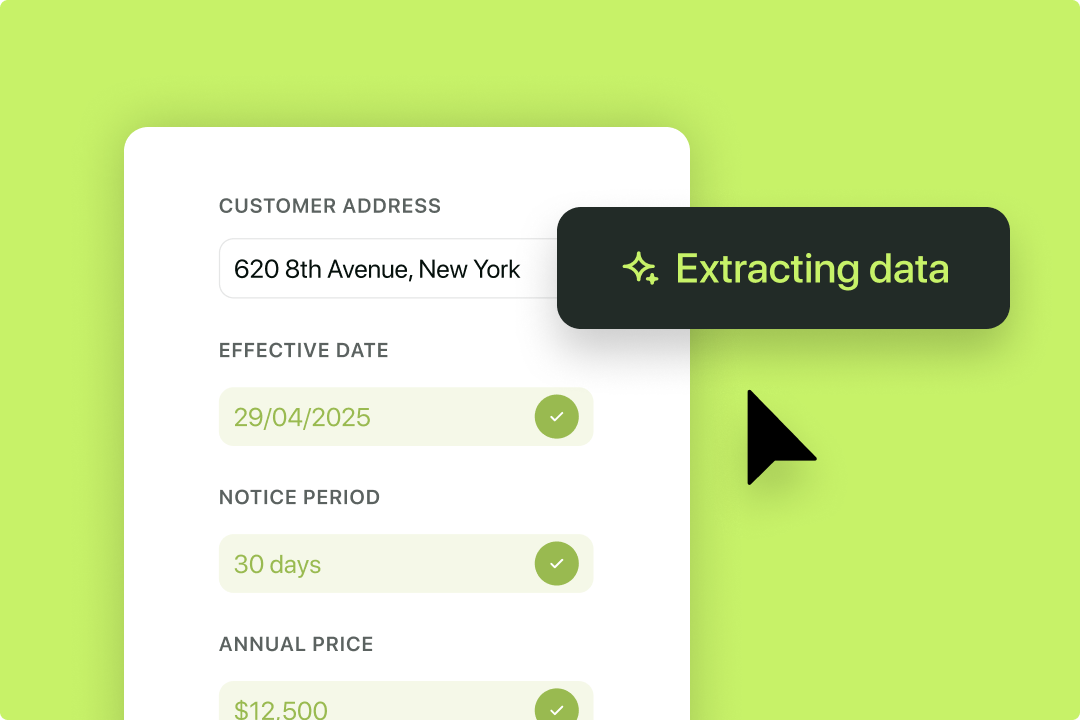
The result isn't just faster contracting. It's contracting that generates usable data. Renewal dates, liability caps, payment terms, governing law: all of it becomes searchable and reportable rather than buried in static PDFs.
If your team is still managing MSAs through email threads and shared drives, the Juro community is a good place to see how legal and ops teams at other scaling businesses have approached the transition. Or book a demo to see the workflow in practice.
Juro is the #1-rated contract platform for speed of implementation — connect your CRM, automate templates, and close deals without the paperwork.
Book a personalised demo

Hello. We are Juro Online Limited (known by humans as Juro). Here's a summary of how we protect your data and respect your privacy.