

.svg)

.svg)
.svg)

🇺🇸 22 Boston Wharf Rd, Boston, MA 02210
🇬🇧 2 Pear Tree Court, London EC1R 0DS
© 2026, Juro. All rights reserved.


🇺🇸 22 Boston Wharf Rd, Boston, MA 02210
🇬🇧 2 Pear Tree Court, London EC1R 0DS
© 2026, Juro. All rights reserved.

Download a free referral agreement template and learn what to include, common pitfalls, and how to manage referrals at scale.



"It takes the sales team four clicks to generate and approve a contract in Juro. We're saving 25 minutes per contract."
Read Paddle's customer story >
.avif)
Chris McFalls,
Rev Ops
"With Juro, approvals take less than two hours, and most contracts are fully signed within a day of being sent"
Read Goldin’s customer story >.png)
.avif)
Kyle Piper,
Contracts Manager
"Everyone works out of Juro - it's the key tool we use to do our job"
Read ANC’s customer story >


Referral agreements are easy to underestimate.
They look simple on the surface: one party sends leads, the other pays a commission. But when commissions go unclaimed, referral sources dry up, or a referrer starts promoting your competitors, it becomes clear quickly that a casual arrangement won't cut it.
A well-drafted referral agreement protects both sides and keeps your referral channel running smoothly as it scales.
Download the free referral agreement template above, or read on to understand what it should include and where these agreements tend to go wrong.
A referral agreement is a contract between a business and a referrer, typically an individual, partner business, or affiliate, that sets out the terms under which the referrer will introduce potential customers to the business in exchange for compensation.
It differs from an affiliate marketing agreement in one key respect: referral agreements tend to govern more direct, relationship-based introductions rather than mass-market promotional activity.
A referrer is usually someone with existing credibility in a space, such as a consultant, an industry contact, or a complementary service provider, rather than a publisher or influencer promoting a product to a broad audience.
The agreement sets out what counts as a qualifying referral, how and when commission is paid, and what happens if the relationship ends.
A referral agreement has two goals:
For businesses, referral agreements bring credibility and a potential increase in customers. For referrers, they the path for how and when they will be rewarded for their services.
Not all referral agreements need to be long, but they do need to be precise. These are the clauses that matter most and the ones most often drafted loosely.
Identify both parties clearly and specify whether the referrer is acting as an independent contractor (they almost always are). This has tax and classification implications that vary by jurisdiction, so it is worth getting the language right from the outset.
This is where most referral disputes begin. The agreement needs to say exactly what constitutes a referral that earns commission: does the prospect need to be a net-new contact? Does the referrer need to make a warm introduction, or is passing on a name sufficient? What if the prospect was already in the company's sales pipeline?
Being specific here prevents significant disagreements down the line.
Set out whether the referrer earns a flat fee, a percentage of contract value, or a recurring commission on ongoing revenue.
If the business sells subscription products, specify whether commission applies to renewals, upsells, or only to the initial sale. Define the base on which any percentage is calculated, since net revenue, contract value, and cash received can differ significantly.
State when payment is triggered. Many businesses pay on signed contract; others wait until the customer pays. Either is reasonable, but the agreement should be unambiguous.
Consider including a clawback provision if the customer cancels within a defined window, which is particularly important for SaaS or subscription businesses.
Define how referrals are attributed. Unique referral codes, registration portals, or specific email introductions all work, but the method needs to be agreed in advance. Without clear attribution mechanics, disputed commissions are almost inevitable as the referral program grows.
Decide whether the referrer is permitted to refer prospects to competitors. Many referral agreements are non-exclusive by default, but if you're offering higher commission in exchange for exclusivity, that should be documented clearly. Non-compete provisions can be subject to local legal restrictions, so it is worth taking advice before including one.
Include a clear start date, duration, and termination conditions. Specify what happens to pending referrals if the agreement ends. A common approach is to include a 90-day tail period for referrals already in progress.
Referrers often receive access to pricing, product roadmaps, or sales materials. Include a confidentiality clause, or point to a separate NDA if one is already in place.
Specify what the referrer is and is not permitted to do with your brand assets, marketing collateral, and trademarks. A referrer who creates their own materials using your branding can create compliance and reputational issues that are worth avoiding upfront.

1. Vague commission triggers. If the agreement says the referrer earns commission on a "successful referral" without defining what success looks like, expect disagreements. Be specific: a signed contract, a paid invoice, or a completed onboarding milestone. Pick one and state it.
2. No cap on liability. Businesses sometimes agree to unlimited commission obligations without thinking through the implications. If a referrer has an unusually productive quarter, or if a commission structure interacts badly with a large enterprise deal, the liability can be significant. Consider whether a cap is appropriate.
3. Forgetting about tax. Referral commissions may create tax reporting obligations depending on your jurisdiction and the amount paid. It is worth building a process for collecting the referrer's tax information at onboarding rather than chasing it later. Your finance or legal team can advise on the specifics.
4. Overlapping referral claims. If multiple referrers introduce the same prospect, the agreement should have a clear rule for who gets credit. Typically this is the first registered introduction, but it needs to be explicit.
5. Not updating templates when commission structures change. If you change your pricing model or adjust commission rates, make sure the template and any live agreements are updated accordingly. Using outdated templates is a surprisingly common source of payment disputes.
It is worth understanding how a referral agreement sits alongside other partnership contract types, since the boundaries can blur.
A marketing agreement is typically broader, covering a range of promotional activities rather than just introductions. A referral agreement is narrower and outcome-focused.
An affiliate marketing agreement is structurally similar but usually operates at higher volume and through automated tracking infrastructure, such as affiliate links and publisher dashboards, rather than personal introductions.
A reseller agreement or partnership agreement involves the other party selling on your behalf, often with their own commercial relationship with the end customer, rather than simply passing leads to you.
If your arrangement starts to look more like a reseller relationship, where the referrer is quoting, negotiating, or closing deals, a referral agreement is probably the wrong vehicle.

A single referral agreement is easy to manage manually. Ten starts to get complicated. Fifty means you need a system.
The core challenges are consistency (making sure every referrer is on the same terms unless there is a deliberate reason to vary them), tracking (knowing which agreements are active, when they expire, and what commissions are outstanding), and speed (getting agreements signed quickly so referrers can start promoting without delay).
Teams that manage referral programs in Juro typically build a standard, automated contract template and use conditional logic to handle common variations, such as different commission rates by tier or different payment terms for different regions.
Sales or partnership teams can then self-serve new referral agreements directly, without needing legal to draft each one from scratch. When a new referrer is onboarded through a CRM like Salesforce or HubSpot, the contract data can flow directly into the agreement, eliminating manual entry.
If you are managing a referral program that is growing faster than your legal team can keep up with, book a demo to see how Juro handles this in practice.
Drafting a solid referral agreement is the starting point. Managing a growing referral program, tracking active agreements, monitoring commission obligations, and keeping templates up to date, is where things get harder.
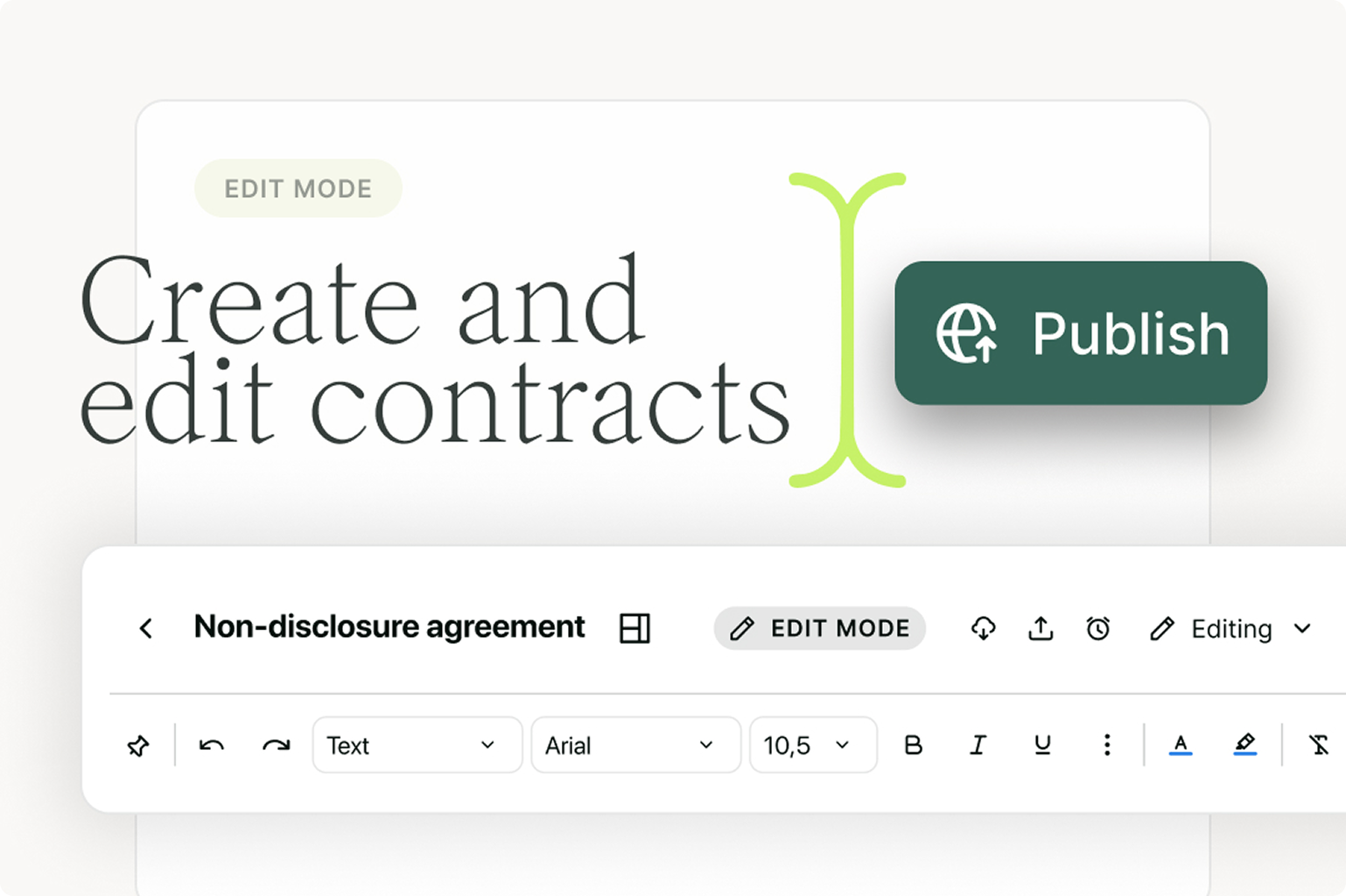
Juro's contract platform lets legal and partnership teams build referral agreement templates that business teams can use to generate, send, and sign agreements without legal involvement on every deal.
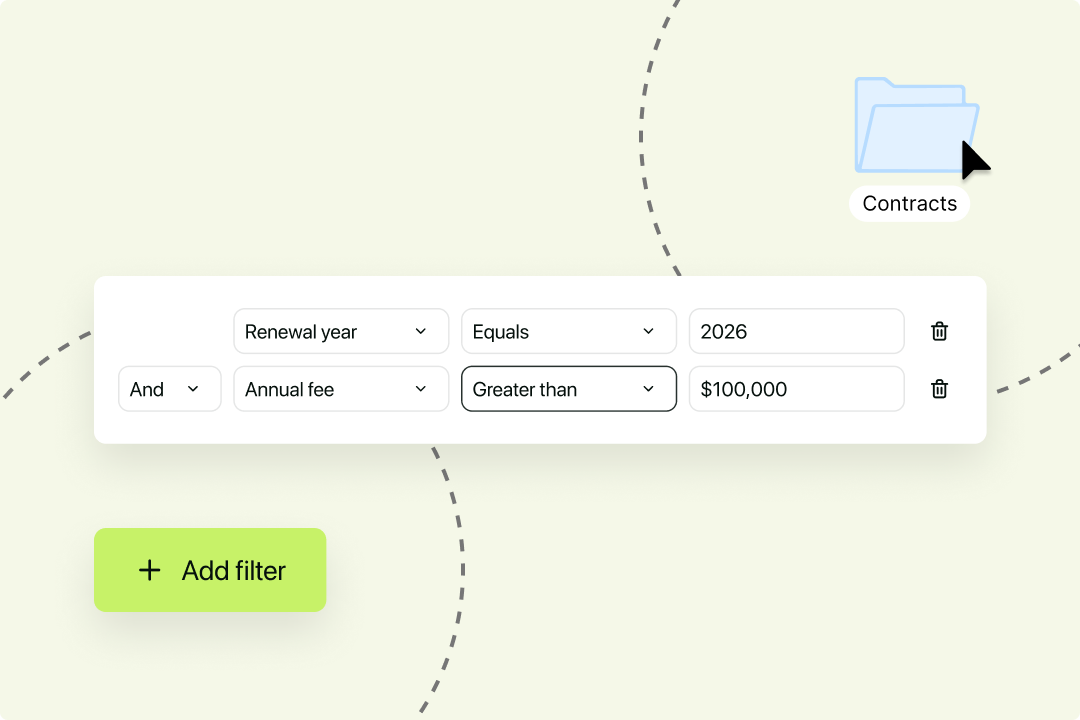
Automated reminders flag renewals and expirations. AI-assisted search makes it easy to pull up any agreement when a commission question comes up.
Want to see how it works? Join the Juro community to hear how other legal and ops teams are managing partner agreements, or book a demo to see the platform in action.
It does not have to be in most jurisdictions, but it absolutely should be. Verbal or informal referral arrangements are a reliable way to end a professional relationship badly. If commission is involved, document it.
Yes. Exclusivity clauses are common in higher-value referral relationships where the business wants the referrer focused entirely on their products.
They need to be clearly scoped to a particular industry, geography, or product category, and should be paired with a fair commission rate that reflects the restriction.
Non-compete provisions can be subject to local legal restrictions, so it is worth getting advice before including one.
If a business fails to pay commissions owed under a valid referral agreement, the referrer can generally pursue a breach of contract claim. The agreement's dispute resolution clause, whether it specifies mediation, arbitration, or litigation, will determine how that plays out.
Most referral agreements run for 12 months and renew automatically unless either party terminates. Some businesses prefer shorter initial terms with renewal options to give themselves flexibility to adjust terms as the program matures.
Answer
Juro is the #1-rated contract platform for speed of implementation — connect your CRM, automate templates, and close deals without the paperwork.
Book a personalised demo

Hello. We are Juro Online Limited (known by humans as Juro). Here's a summary of how we protect your data and respect your privacy.