


.svg)

.svg)
.svg)

🇺🇸 22 Boston Wharf Rd, Boston, MA 02210
🇬🇧 2 Pear Tree Court, London EC1R 0DS
© 2026, Juro. All rights reserved.


🇺🇸 22 Boston Wharf Rd, Boston, MA 02210
🇬🇧 2 Pear Tree Court, London EC1R 0DS
© 2026, Juro. All rights reserved.

Google Docs provides a flexible and collaborative way for organizations to create and manage contracts. However, contracts created in Google Docs will often need to be signed in Google Docs too.
This explainer describes the two different ways you can create a signature in Google Docs and offers you a better, more efficient alternative to Google Docs eSignatures.
The first way to create an electronic signature in Google Docs is to insert one as a drawing. Let’s run through the steps you can take to do this now.
1. Open the version of the contract that you want to add your signature to in Google Docs.
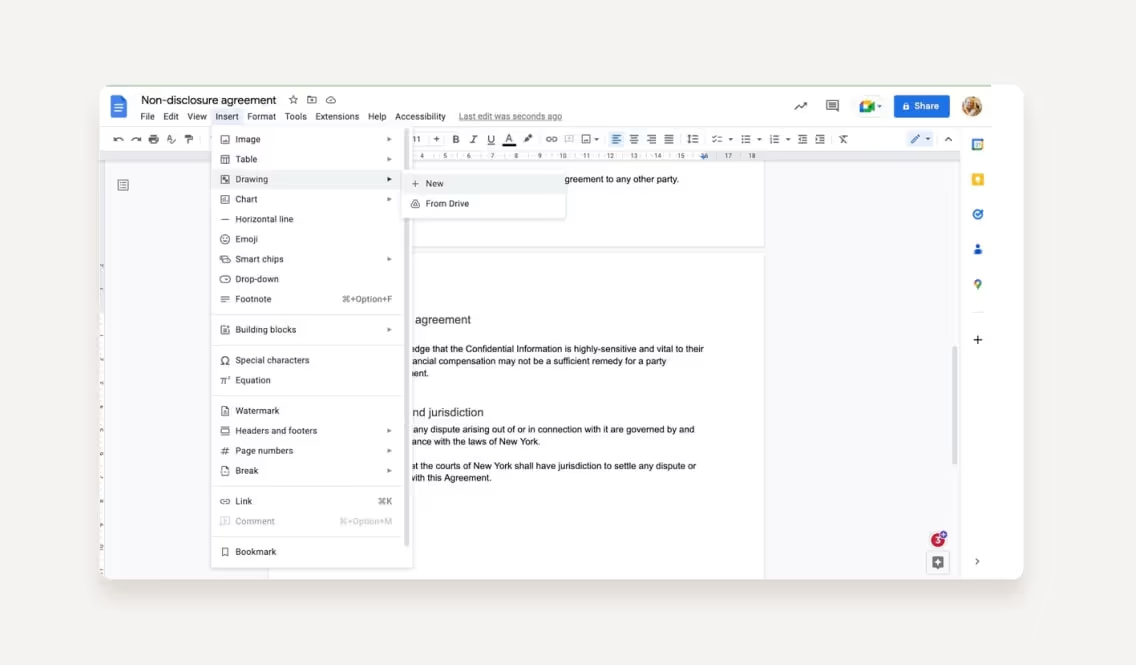
2. Select ‘Insert’, which can be found in the header. Then select ‘Drawing’ from the dropdown menu, followed by ‘New’.
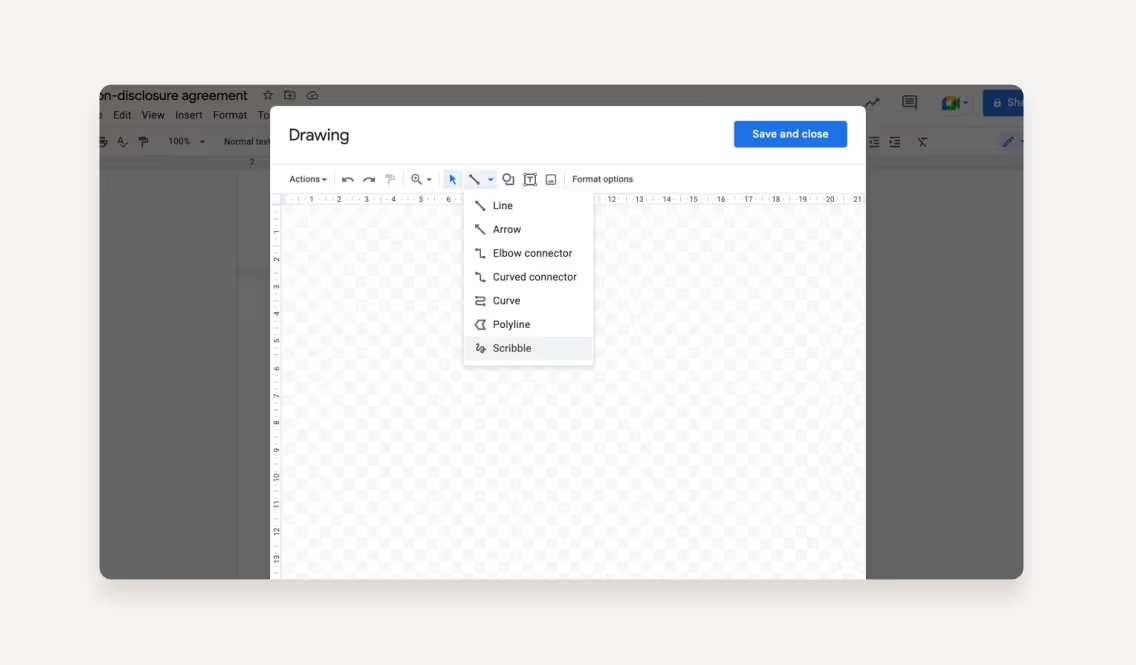
3. This will take you to a pop-up where you’ll be able to create a signature in Google Docs. Once you’re in the editor, select the line emoji from the toolbar and then click ‘Scribble’ as this will enable you to draw your signature by hand.
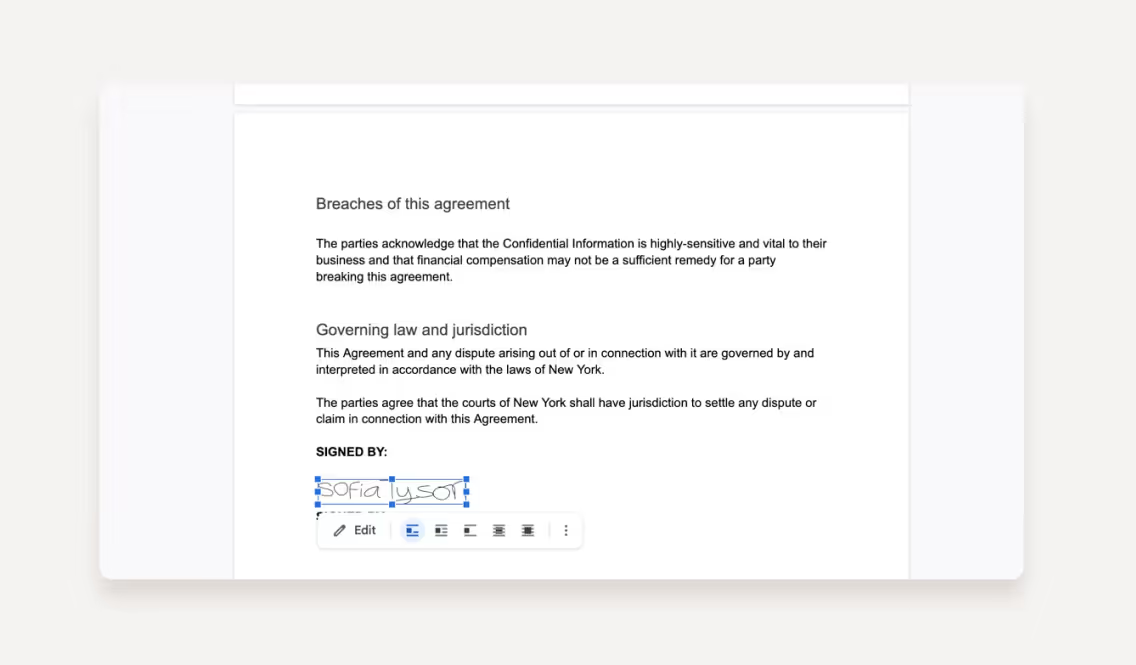
4. Now draw your signature in the editor. You can select the drawing and resize it by dragging the corners to make it bigger or smaller. Then click ‘Save and close’ to add the signature to your Google Doc.
5. The signature will then appear on your Google Doc. If it needs moving around, simply drag the signature like you would do to move any other visual element.
You can also insert a signature in Google Docs in the form of an image.
To do this, you can either scan a signature that you’ve drawn on paper or take a photo of the signature you’ve drawn and upload it.
Once you’ve done either of these things, you’ll need to have a copy of the image stored in the device you’re using to sign the contract.
From there, you can add the image of the signature to the Google doc by selecting ‘Insert’ in the header of the screen, followed by ‘Image’ and ‘Upload from computer’.
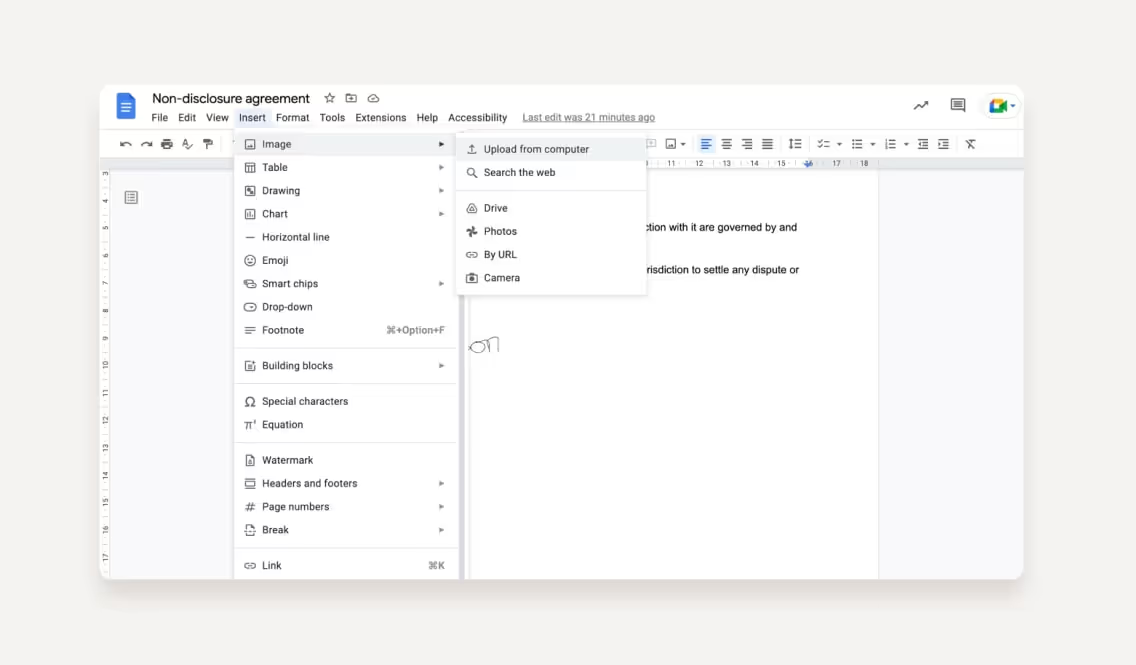
You’ll be taken to a screen showing all of your files and images. Select the photo of your signature and press upload, or continue. This will add the image to the Google Doc where you can move and resize it, just like any other visual element.
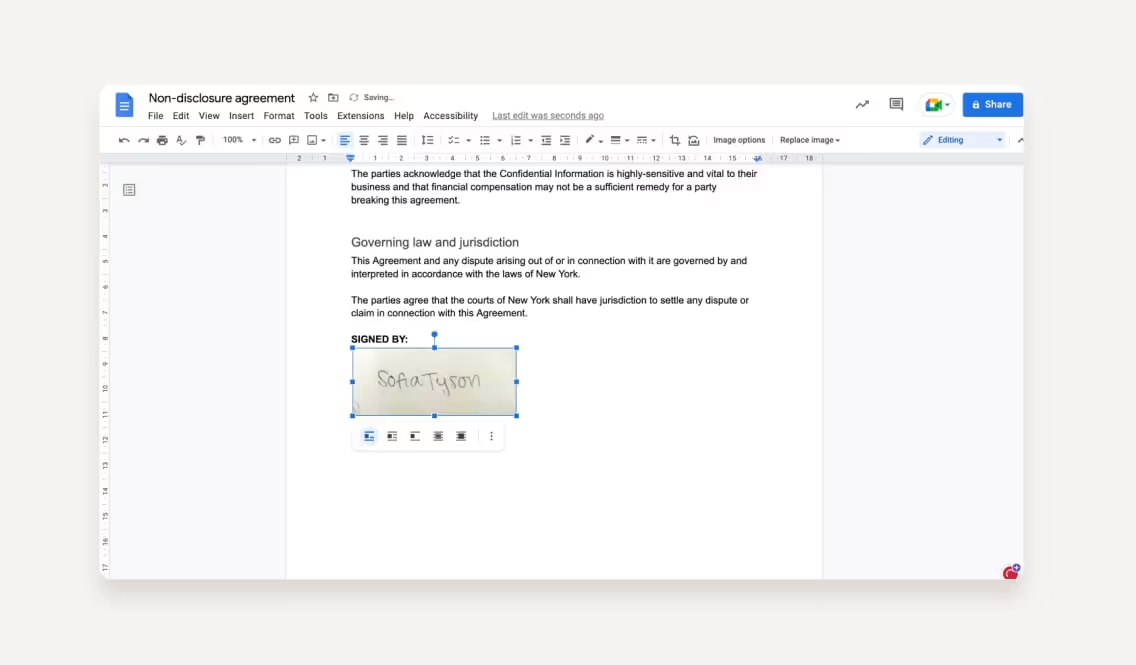
While it is possible to insert a signature in Google Docs, it’s certainly not the preferred method of contract signing. In fact, there are a few limitations of a Google Doc signature.
Firstly, adding a signature in Google Docs won’t offer the secure and traceable eSigning experience that many businesses favour.
The main reason for this is that there’s no identity verification required when you add a signature in Google Docs, and there isn’t a clear audit trail that captures the signer’s identity, IP address, and time of signing, either.
These features prove the authenticity of an electronic signature and help to ensure that documents haven’t been tampered or signed without signatory authority.
This is distinct from signing contracts in Juro where users have access to identity verification and immutable document record capturing the signature details.
Another limitation of adding a signature in Google Docs is that each contract needs to have the signature added to it individually.
This makes the process incredibly time-consuming for businesses managing large volumes of contracts as it means each needs to be opened and signed one by one.
A better, more efficient option would be to use an electronic signature tool that enables you to mass-sign contracts. This would remove the friction that occurs when you jump between files and enable your senior stakeholders to return to higher-value work faster.
Juro users can select all of the contracts that need signing from their contract repository and sign these in bulk. This means signing hundreds of contracts in just a few clicks. To find out more about Juro’s mass sign functionality and native eSignatures, hit the button below to book a personalized demo.

Google Docs also restricts the functionality available when used on mobiles, meaning it’s not always possible to draw signatures in Google Docs on a smartphone.
This is a significant blocker for contracts as it means that signatories have to be at a desktop to add their signature.
This is distinct from Juro where users can sign contracts electronically on any device, without compromising on experience.
It’s also fair to say that creating a signature in Google Docs isn’t as seamless as signing a contract in a platform designed for contract management, like Juro.
It doesn’t appear as professional either, particularly given the formatting limitations in Google Docs.
Yet, the contract signing process is one of the most important opportunities you have to leave a lasting impression on your counterparty. It’s the point where they decide whether to push the deal over the line or not. The last thing you want is for them to experience friction at this stage.
If you want to create a positive impression and improve the counterparty’s experience at the point of signing, it’s better to work with a tool that was designed for contracts and makes the route to adding a signature as simple as possible.
Juro clearly signposts how counterparties can add their signature, with designated boxes for signatures that users can drag and drop onto the page.
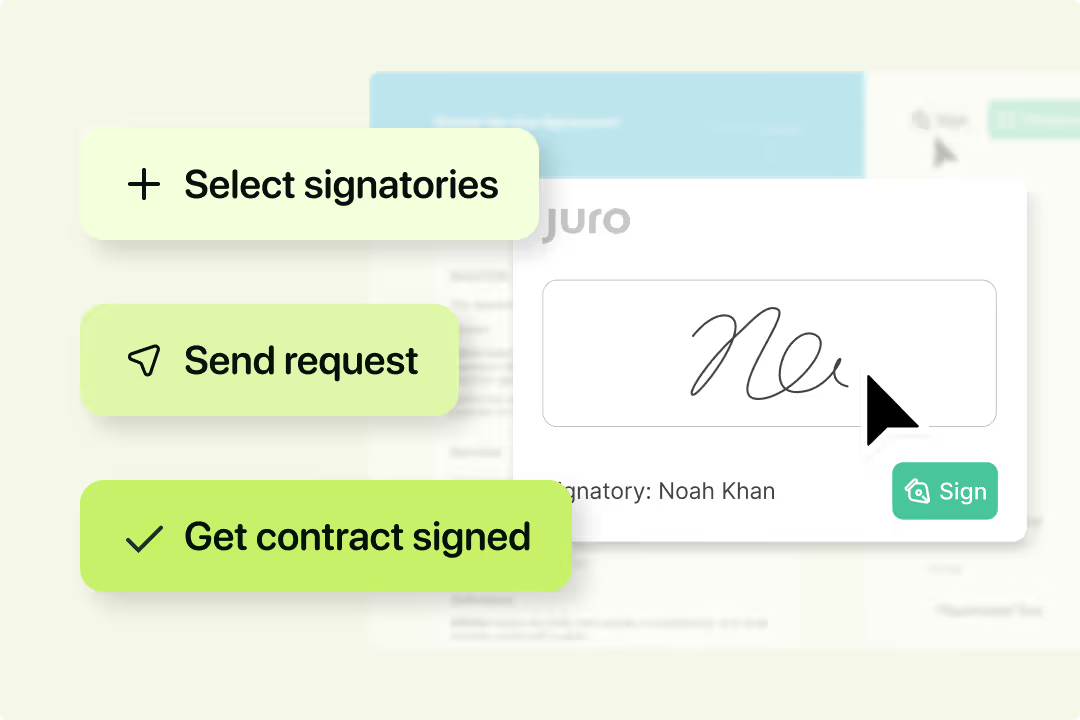
Juro users can even send automated signing requests and reminders prompting counterparties to add their signature to the contract.
In Google Docs, counterparties have to guess where to add their signature, and how to add it in the first place.
Adding a signature in Google Docs can work if you have a handful of contracts that need signing and you need something free.
However, if you’re managing business contracts in large quantities and closing deals with established companies, it’s always better to use an electronic signature solution instead. It’s more secure, and it offers a better signing experience for your team and counterparties.
Juro’s all-in-one platform enables your team to agree and manage contracts in one unified workspace. This means that Juro users can create, review, negotiate, store and track their contracts in the platform, as well as signing them.
Juro’s native eSignature also complies with the eIDAS, ESIGN and UETA acts, meaning it meets strict legal standards across the world.
To find out more, fill in the form below.
Lorem ipsum dolor sit amet, consectetur adipiscing elit. Suspendisse varius enim in eros elementum tristique. Duis cursus, mi quis viverra ornare, eros dolor interdum nulla, ut commodo diam libero vitae erat. Aenean faucibus nibh et justo cursus id rutrum lorem imperdiet. Nunc ut sem vitae risus tristique posuere.


Hello. We are Juro Online Limited (known by humans as Juro). Here's a summary of how we protect your data and respect your privacy.