




.svg)

.svg)
.svg)

🇺🇸 22 Boston Wharf Rd, Boston, MA 02210
🇬🇧 2 Pear Tree Court, London EC1R 0DS
© 2026, Juro. All rights reserved.


🇺🇸 22 Boston Wharf Rd, Boston, MA 02210
🇬🇧 2 Pear Tree Court, London EC1R 0DS
© 2026, Juro. All rights reserved.

In any business, certain individuals have the authority to sign contracts, agreements, and other legal documents on behalf of the company.
These individuals are known as authorized signatories. But who can be an authorized signatory, and why is it important to get right?
This guide explains the role of an authorized signatory, the risks of getting it wrong, and how businesses can manage signatory authority effectively.
An authorized signatory is a person given the legal authority to sign documents on behalf of a company. This can include contracts, financial agreements, regulatory filings, and other legally binding documents.
Authorization can come from:
Without proper authorization, a contract or agreement may not be legally binding, leaving the company exposed to risk.
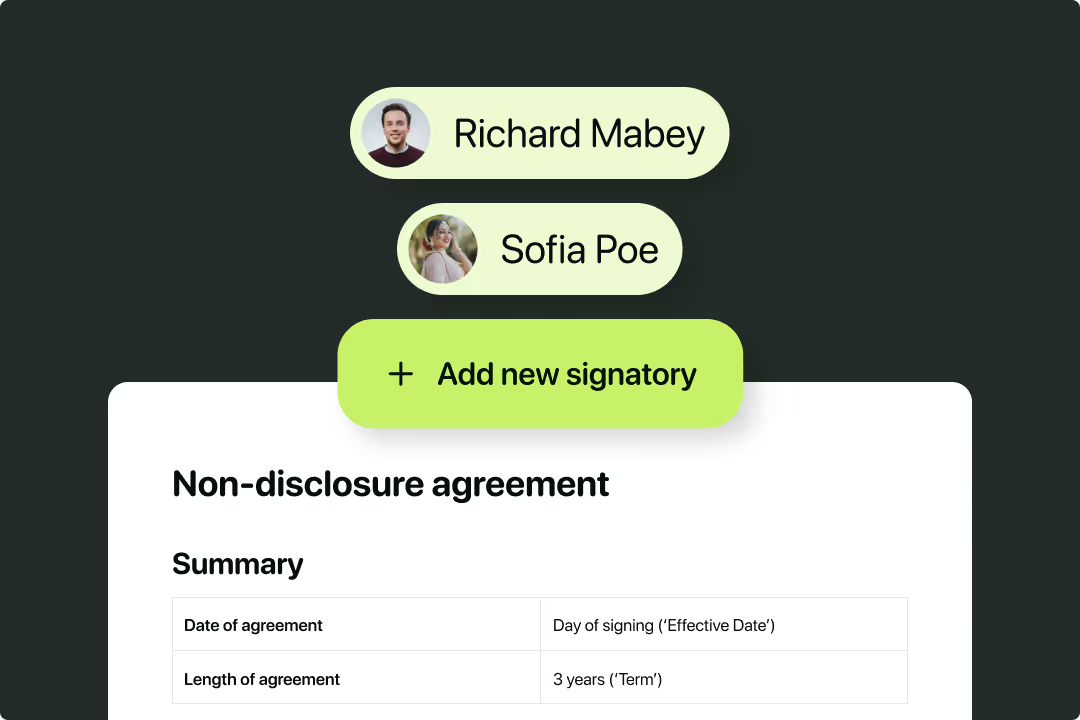
A business can designate one or more individuals as authorized signatories, depending on its structure and internal policies. These individuals often include:
Businesses can also authorize external parties—such as lawyers or consultants—to sign on their behalf. Read more about that in our guide to signatory authority.
Assigning the right signatories ensures that contracts are legally valid and enforceable. Failing to do so can lead to:

Clearly defining who can sign which documents—and keeping this information up to date—helps businesses avoid these risks and agree contracts with confidence knowing they can rely on the terms in the months and years to come.
Imagine this: A company’s CFO has always signed off on vendor contracts. But as the business scales, more contracts land on their desk, creating bottlenecks.
To speed things up, the company allows department heads to sign agreements under a certain value. Months later, a supplier disputes a contract, arguing that the person who signed it wasn’t authorized. The finance team scrambles to check—who actually had the authority to sign that deal?
This is a common scenario. Without clear guidelines, companies risk contracts being signed by the wrong people, slowing down deals or creating legal headaches. So how can businesses get it right?
Well, there are a few things you can to do get authorized signatories under control.
A company’s internal policies should outline:
This information should be documented in corporate governance documents or as a signature policy.
Changes in leadership, restructuring, or regulatory updates can affect who is authorized to sign contracts. If companies don’t update their signatory lists, outdated information can lead to contracts being signed by unauthorized individuals—rendering them unenforceable.
That’s why regular reviews are key. It’s best practice is to update signatory lists quarterly or whenever a leadership change occurs. Businesses should also maintain a centralized record of authorized signatories, so teams can verify approvals quickly and remove friction throughout the contract lifecycle.
Managing signatory authority manually—through spreadsheets or email chains—leaves too much room for error. A contract management system like Juro automates this process by:
With automated workflows, businesses can ensure the right person always signs the right contract—without delays or compliance risks.

Many contract-related mistakes happen simply because employees aren’t sure who is authorized to sign. A sales rep might assume their manager can approve a sales contract, only to find out later that legal approval was required.
To avoid this, companies should provide regular training on:
It’s also worth scheduling routine reminders about this process where necessary, particularly if you have new joiners you want to make aware of the rules on signatory authority.
Regular training and clear documentation can help prevent costly mistakes, so it's worth getting ahead of.
Tracking and managing signing authority manually can be time-consuming and error-prone. Juro’s contract automation platform helps businesses enforce signing controls by:
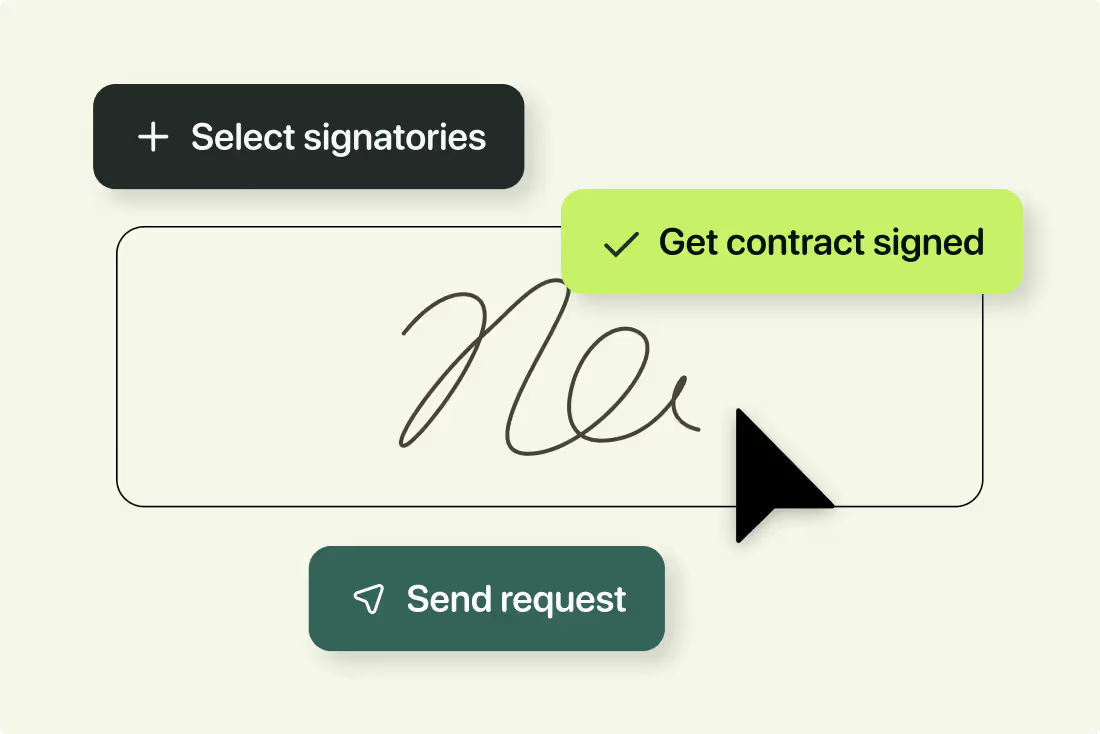
With Juro, businesses can ensure that the right people sign the right contracts—reducing legal risk and keeping operations running smoothly.
Authorized signatories play a critical role in ensuring contracts are legally valid and enforceable. Without clear policies and controls, businesses risk invalid agreements, compliance breaches, and operational inefficiencies.
By defining signing authority clearly, keeping records up to date, and using contract management tools like Juro, businesses can manage signatories effectively—without unnecessary admin or risk.
{{quote1}}
Want to streamline contract approvals? Book a demo of Juro today.

Lorem ipsum dolor sit amet, consectetur adipiscing elit. Suspendisse varius enim in eros elementum tristique. Duis cursus, mi quis viverra ornare, eros dolor interdum nulla, ut commodo diam libero vitae erat. Aenean faucibus nibh et justo cursus id rutrum lorem imperdiet. Nunc ut sem vitae risus tristique posuere.


Hello. We are Juro Online Limited (known by humans as Juro). Here's a summary of how we protect your data and respect your privacy.




.avif)
Courtney Byrne, Director of Strategic Growth at BB Imaging