




.svg)

.svg)
.svg)

🇺🇸 22 Boston Wharf Rd, Boston, MA 02210
🇬🇧 2 Pear Tree Court, London EC1R 0DS
© 2026, Juro. All rights reserved.


🇺🇸 22 Boston Wharf Rd, Boston, MA 02210
🇬🇧 2 Pear Tree Court, London EC1R 0DS
© 2026, Juro. All rights reserved.

As healthcare organisations expand into new markets, launch new clinical services or partner with external providers, the number of agreements grows — and so does the risk associated with managing them manually.
Common workflows such as clinician onboarding, vendor procurement, clinical research agreements, platform integrations, and patient-facing services often span multiple teams and jurisdictions. Each carries its own regulatory considerations, approval routes and data-handling requirements.
To manage this growing complexity, many healthtech teams turn to contract management software.
These platforms centralize documents, bring consistency to how contracts move through the business, and turn scattered information into structured, usable insights — without slowing day-to-day operations.
Healthcare contract management is the end-to-end process of creating, negotiating, approving, signing, storing, and tracking contracts across a healthcare organization.
These contracts vary widely depending on the type of healthcare company, but commonly include:
While these contracts don’t typically involve PHI directly, they often contain sensitive operational, financial, clinical, or regulatory information that must be handled carefully.

Healthcare organizations operate under strict regulatory and operational oversight, which makes manual contracting hard to manage at scale.
As vendor networks expand, clinical teams grow, and new technology or research partnerships are introduced, contract volume increases quickly — and so does the risk of errors, missed approvals, or inconsistent terms.
Contract management software helps teams stay in control by centralizing documents, standardizing templates, maintaining audit trails, and enforcing clear approval workflows that support compliance across departments.

Effective contract management in healthcare isn’t just about software — it’s about pairing the right platform with strong, repeatable processes that keep teams aligned and reduce risk across every department.
The best-performing healthcare and healthtech organizations combine scalable workflows with tools that automate routine admin, increase visibility, and support cross-functional collaboration.
These best practices reflect what we’ve seen across teams at BB Imaging, Entourage Health, Eucalyptus, and other fast-growing healthcare companies that work with Juro.
Automation only works if your templates are consistent. Healthcare organizations rely on repeatable agreements — clinician engagements, vendor contracts, service-level agreements, NDAs — and standardizing these before they enter a CLM pays dividends.
High-performing teams consolidate:
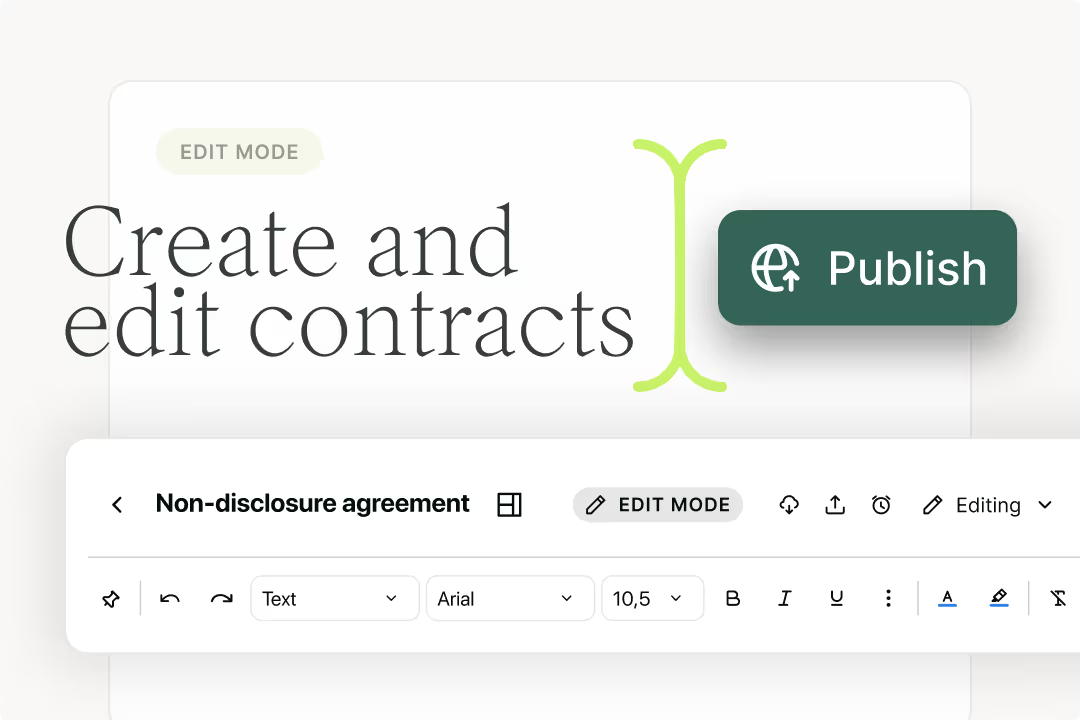
Entourage Health used Juro’s templating and clause management capabilities to finally align the business around consistent employment and commercial terms. This foundation made self-serve contracting safe and scalable, with tangible ROI.
Healthcare contracting often involves multiple stakeholders — especially for agreements that impact service delivery, vendor risk, data handling, or staffing. Mapping your approval routes before implementing a CLM ensures the software reflects real-world governance.
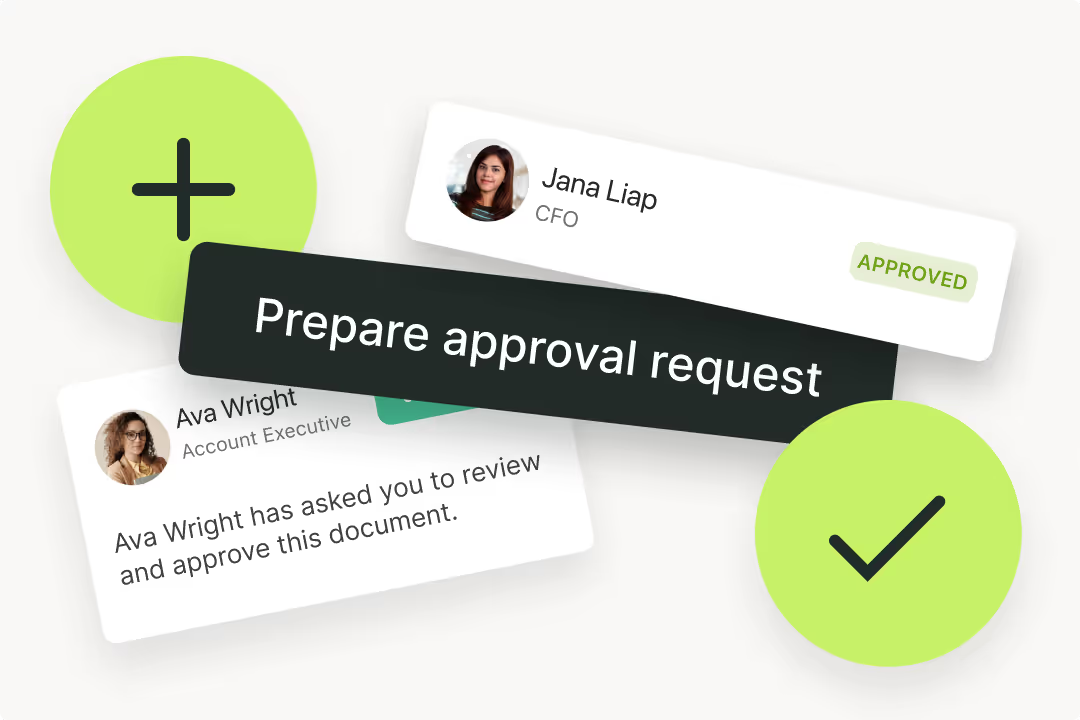
Typical flows include:
In Juro, teams like BB Imaging automate these dynamic approval paths using workflow builder and approver links — ensuring contracts move quickly while maintaining internal controls.
{{quote1}}
Healthcare ORGs handle everything from low-risk operational contracts to highly sensitive staffing agreements, vendor security documents, and data-processing terms. Not every contract should be visible to every team.
Common access tiers include:
Juro’s granular contract permissions and team-based access controls help companies like Entourage maintain visibility where needed while protecting sensitive information — a key requirement for healthcare organizations with distributed teams.
{{quote2}}
Instead of treating contracts as static files, leading healthcare teams extract and organize the key details within them. This gives them clearer oversight of obligations, risks, and renewal timelines across the business.
Valuable data points include:
Modern CLMs now also use AI to extract key fields automatically, reducing the manual work required to tag legacy contracts when migrating into a new system.
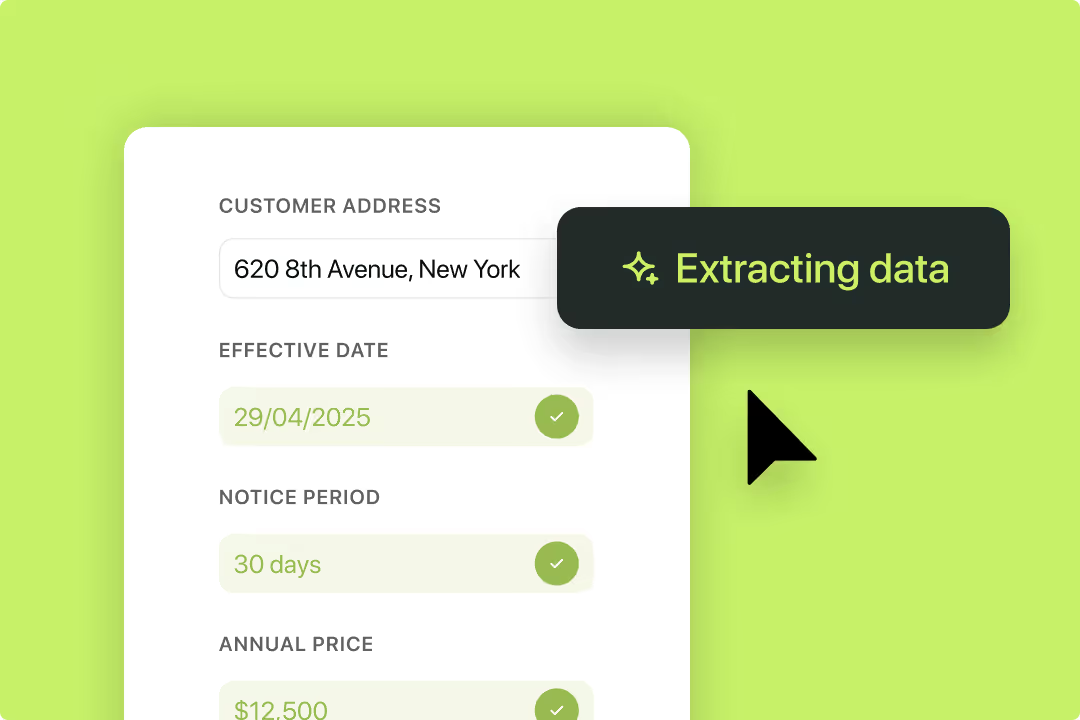
This makes it easier to get a full and accurate picture of your contract portfolio from day one — rather than waiting months for teams to label documents by hand.
Healthcare contracts frequently include notice periods, pricing changes, performance obligations, and renewal automation clauses. Automated reminders help organizations stay ahead of these deadlines rather than react to them.
Juro’s contract reminders keep teams informed well before a contract is due to renew, helping avoid unnecessary spend and ensuring compliance requirements aren’t missed.
BB Imaging took this functionality even further by integrating Juro and Airtable to notify finance and scheduling teams instantly after signature — eliminating manual follow-up in turn.
Self-serve contracting reduces bottlenecks without increasing risk. This is especially relevant in healthcare, where HR, operations, commercial teams, and clinical coordinators may need to generate agreements frequently.
Effective self-serve workflows require:
Eucalyptus created approximately 50 templates within weeks of onboarding Juro, enabling colleagues to generate contracts through guided workflows. This contributed to saving 12 hours a week in legal time.
{{quote3}}
Once contracts and metadata are centralized, trend analysis becomes much easier. Teams often track:
Reviewing these legal department KPIs helps organizations refine templates, adjust approval paths, or plan operational capacity.
Healthcare organizations need a contract system that can keep up with the pace and complexity of their work. Vendor networks are expanding, staffing requirements are evolving, and regulatory expectations continue to rise — all while the teams doing the work stay lean.
A modern CLM can remove a huge amount of friction from these workflows, but only if it is genuinely easy to use, secure, and designed to support cross-functional contracting at scale.
Juro is one of the platforms increasingly adopted by healthcare and healthtech teams for exactly these reasons. Customers like BB Imaging, Entourage Health, and Eucalyptus have used Juro to centralize their contracts, standardize their templates, and automate manual steps that previously slowed down commercial and operational teams.

Because Juro combines templating, approvals, negotiation, signing, storage, and contract data in a single workspace, healthcare teams can work faster without introducing additional risk.
Departments outside legal can self-serve safely. Approvals progress in the right order. Renewal dates surface automatically. And contract data becomes reliable enough to use in reporting, audits, and operational planning.
For healthcare organizations looking to reduce manual admin, strengthen governance, and create contracting processes that scale, Juro provides a flexible, user-friendly platform that works for legal teams and business users alike.
If you’d like to see how Juro could support your workflows — from clinician onboarding to vendor procurement — you can book a personalized demo and explore the platform in action.
Lorem ipsum dolor sit amet, consectetur adipiscing elit. Suspendisse varius enim in eros elementum tristique. Duis cursus, mi quis viverra ornare, eros dolor interdum nulla, ut commodo diam libero vitae erat. Aenean faucibus nibh et justo cursus id rutrum lorem imperdiet. Nunc ut sem vitae risus tristique posuere.


Hello. We are Juro Online Limited (known by humans as Juro). Here's a summary of how we protect your data and respect your privacy.




.avif)
Courtney Byrne, Director of Strategic Growth at BB Imaging

Mimi Mulhall, VP People at Entourage Health

Ryan Zahrai, Head of Legal at Eucalyptus