

🇺🇸 22 Boston Wharf Rd, Boston, MA 02210
🇬🇧 2 Pear Tree Court, London EC1R 0DS
© 2026, Juro. All rights reserved.


🇺🇸 22 Boston Wharf Rd, Boston, MA 02210
🇬🇧 2 Pear Tree Court, London EC1R 0DS
© 2026, Juro. All rights reserved.

Hiring your next freelancer? This freelancer agreement template will help you secure and onboard freelancers more efficiently.



"It takes the sales team four clicks to generate and approve a contract in Juro. We're saving 25 minutes per contract."
Read Paddle's customer story >

Chris McFalls,
Rev Ops
"With Juro, approvals take less than two hours, and most contracts are fully signed within a day of being sent"
Read Goldin’s customer story >

Kyle Piper,
Contracts Manager
"Everyone works out of Juro - it's the key tool we use to do our job"
Read ANC’s customer story >


Businesses often hire freelancers to support on projects that they don't have the expertise or capacity to do in-house. This means that companies can manage numerous freelancer contracts at any one time.
This guide will explore how you can manage these freelance agreements more efficiently. We'll also give you a freelance agreement template that you can use to get started.
A freelance agreement is a legally binding contract between a business and an independent contractor, often referred to as a freelancer.
The freelancer agreement outlines the specifics of the services to be performed, the compensation, deadlines, confidentiality, and other terms and conditions.
Also known as an independent contractor agreement, this legal document helps both parties to understand and agree on their respective obligations and expectations, ensuring they are fully aligned.
Like this template? Grab our other popular employment contract templates:
The primary purpose of a freelance agreement is to outline the rights, responsibilities, and expectations of both the client and the freelancer.
This agreement is designed to provide a clear roadmap for the project, minimizing potential disagreements and helping to maintain a smooth working relationship between both parties.
The responsibility of managing freelance agreements typically falls on the client's shoulders.
More specifically, freelance agreements will involve input from HR, procurement or legal teams, depending on the company's risk appetite, structure and capacity.
But in some instances, the freelancer will manage and initiate the contract themselves.
No matter who drafts the contract, it's beneficial for both parties to maintain copies of the agreement and to revisit it regularly to ensure compliance with the outlined terms.

The contents of a freelance agreement can vary considerably depending on the service the freelancer is providing and the implications of this.
However, most freelance agreements will have the same main components:
Note that for some professions like accounting, law and consulting, a Letter of Engagement may be preferable to a freelance agreement.
Understanding who manages freelance agreements is one thing. But how do you actually create and manage them?
Well, this depends on how businesses structure their relationships with freelancers, what their internal process looks like, and whether they use a freelance contract template or not.
The process can be particularly painful for businesses that operate without a freelance agreement template.
It means drafting each contract from scratch, reviewing it internally, and obtaining necessary approvals. In businesses with a lot of stakeholders, this can require a lot of time and resource.
Imagine the project manager or HR department having to do this every time they contract a new freelancer. It's not a sustainable approach, especially for businesses planning to scale with the help of freelancers.
Fortunately, many businesses will have a freelance agreement template to hand today.
Having one stored and ready to be customized means no more waiting around for legal support to draft an agreement every time they hire a new freelancer. Instead, project managers can self-serve on creating freelancer agreements.
This streamlined process helps to reduce the time between finding the right freelancer and getting the project started, capturing the best talent before they are snapped up elsewhere.

But the process of managing freelance agreements still isn't painless. There's still quite a bit of manual work required to get the freelance agreements over the line.
When these agreements are managed in Word, project managers or HR teams have to manually add all of the freelancer's data and update the conditions within the contract to reflect the terms of arrangement.
This can be a painstaking process as Word documents are static files. Adjusting a freelance agreement template usually entails creating new versions and copying certain sections of the agreement into a new file to update the conditions.
This means that, even with a freelance agreement template in place, managing these contracts manually can be a repetitive and time-consuming task.
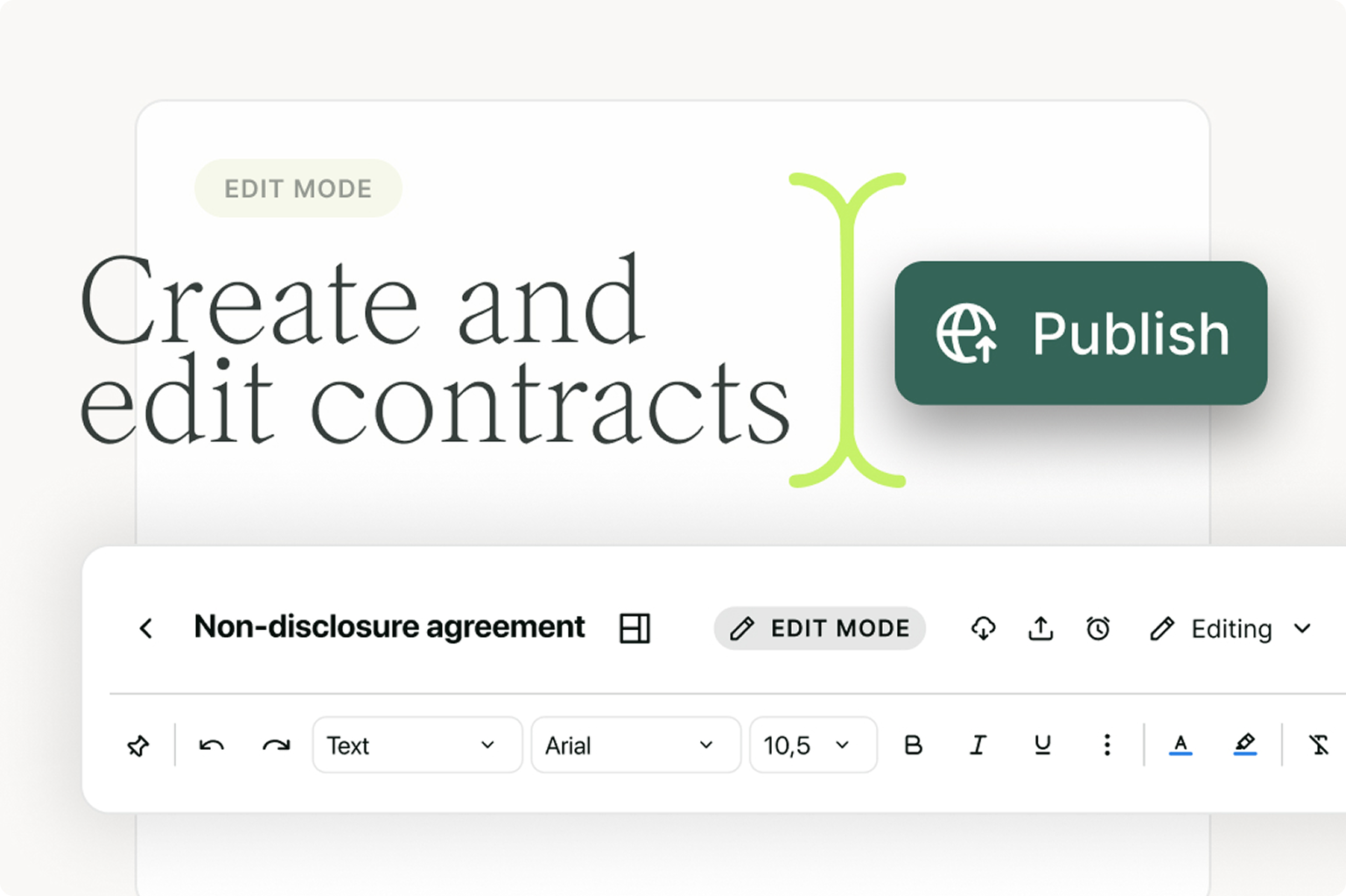
Fortunately, freelance agreements are among the routine contracts that can be automated quickly and easily in Juro. This is made possible through a few different features.
Juro's automated contract templates empower project managers to generate freelance agreements in seconds using terms pre-approved by legal. This empowers project managers to self-serve confidently on contract creation.
Juro's AI legal assistant can also be used to draft entire contracts or individual contract clauses. This makes it quick and easy to customize freelancer agreement templates to reflect the requirements and risks of specific projects.
Juro integrates seamlessly with popular project management platforms like Monday.com and Asana, allowing seamless data transfer from these systems into the contract's smart fields, effectively doing away with manual data entry.
It's natural for freelancers to negotiate the terms of a freelancer agreement, especially if the scope of work increases during the contract process. Fortunately, Juro's browser-based contract negotiation features make it easy for freelancers to clarify doubts or propose changes, as they can add comments directly onto the contract.
Juro's mobile-responsive eSignature functionality allows freelancers to promptly review and sign agreements, no matter where they are.
By automating the management of freelance agreements, businesses can save time, increase accuracy, and focus more on the projects at hand.
Hiring a freelancer is all about reducing the workload for your team, so don't let clunky, manual contract processes add to your plate.
Juro’s AI contract collaboration platform enables your team to create, execute and manage contracts 10x faster than traditional tools. With Juro, you can:
To find out more about how Juro can speed up the process of creating, signing and managing contracts, hit the button below.
A freelance agreement template is a ready-made contract that a business can adapt each time it hires a freelancer for a project. It records what the freelancer will deliver and when, plus how much they're paid and who owns the finished work.
Usually, yes. Without one, there's no written record of what you agreed to pay or when the work is due, and in many countries the freelancer keeps the copyright in what they create. A one-page agreement is enough for a small job and saves an argument if the work isn't what you expected.
Use a freelance agreement when you're paying someone to produce defined work, such as a website or a set of designs. A consulting agreement suits advisers who are paid for their expertise and advice, so it usually says more about confidentiality and conflicts of interest. Both describe an independent contractor relationship, so pick the one that matches what you're buying.
In many countries, including the US and UK, the freelancer normally owns the copyright in what they create unless the contract transfers it to the client in writing. If you want to own the designs or code, the agreement needs a clear assignment of intellectual property, usually taking effect once you've paid in full. Freelancers often ask to show the work in their portfolio, which is usually a reasonable request.
Yes, if the working relationship looks like employment in practice, whatever the contract calls it. Tax and employment authorities usually look at how much control you have over how and when the work is done, and whether the freelancer works for other clients. Misclassification can mean back taxes and penalties, so avoid setting fixed hours or managing a freelancer like a member of staff.
Describe the deliverables and the number of revisions included, then say how anything outside that scope will be agreed and priced. Scope creep causes many freelance disputes, because small extra requests add up and nobody agreed a price for them. A simple rule, such as written approval of a quote before extra work starts, protects both sides.
It's a sound starting point, but tailor the scope of work and payment terms to each project and remove any clauses that don't apply. For specific legal advice on your contract templates, consult an attorney.
Build the template in Juro once and let project managers generate each freelance agreement from it, filling in the fee and deliverables for each hire. When legal changes a position, such as your standard IP clause, they update that one template and every new agreement follows. Signed agreements are stored together, so you can search them for end dates and payment terms.
Yes. Juro's Operator can draft a new freelance agreement template from your existing contractor contracts, picking up your drafting style and the positions you usually take on terms like IP ownership and payment. Your legal team reviews and approves the first draft before anyone uses it, so the template reflects your risk appetite from day one.
Answer
Juro is the #1-rated contract platform for speed of implementation — connect your CRM, automate templates, and close deals without the paperwork.
Book a personalised demo

Hello. We are Juro Online Limited (known by humans as Juro). Here's a summary of how we protect your data and respect your privacy.